The Great Pyramid, built by King Khufu (Cheops) second King of Egypt’s 4th dynasty,
feels overwhelming when you stand next to it.
Especially when you are almost alone. We were waiting at 7 am for the local entrance to open. [a tip from another blogger]
So we didn’t go through the main entrance like most visitors do. It was pleasantly quiet and we still had time to enjoy a Turkish coffee from a nearby small coffee shop.
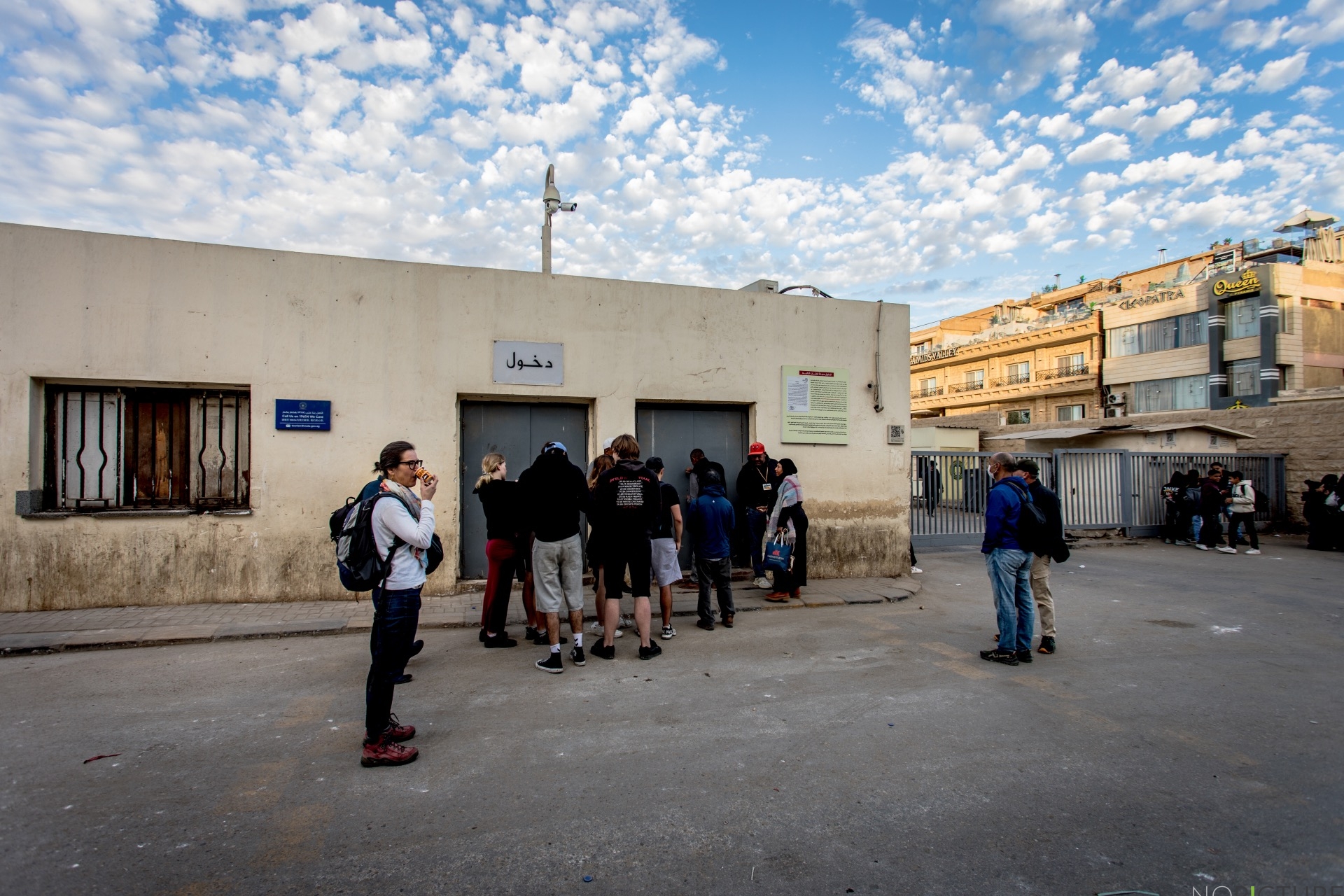
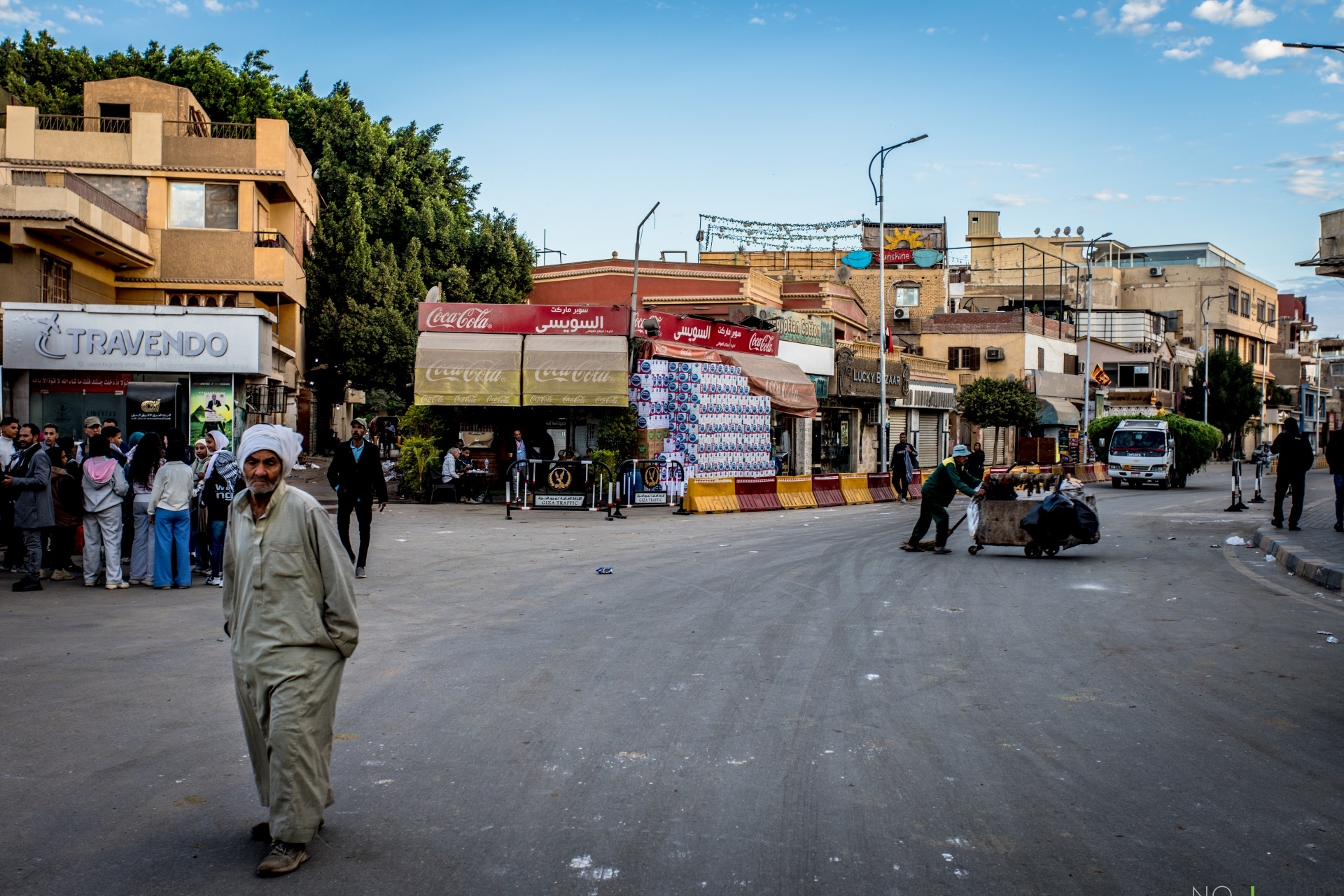
You can hop on a tour bus and let you drive around, but then you miss out on a large part of the experience. And that is giving yourself the time to understand where you are and what you are looking at. Walking is slowing down and slowing down is experiencing more consciously.
By taking the “local” entrance, you are immediately rewarded with a face-to-face encounter with the Sphinx.
Somehow it feels unearthly to stand next to this stone witnesses of ancient history.
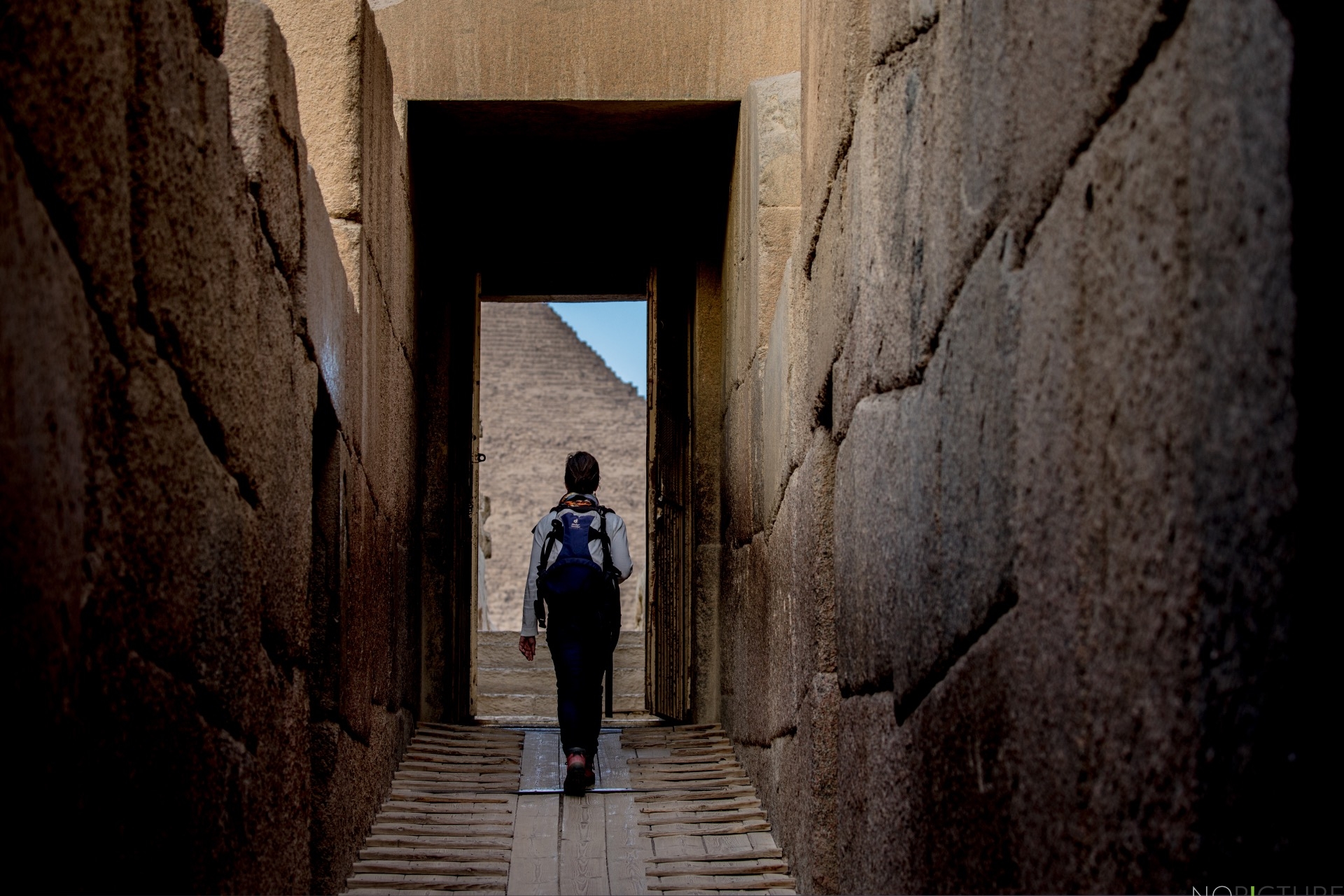
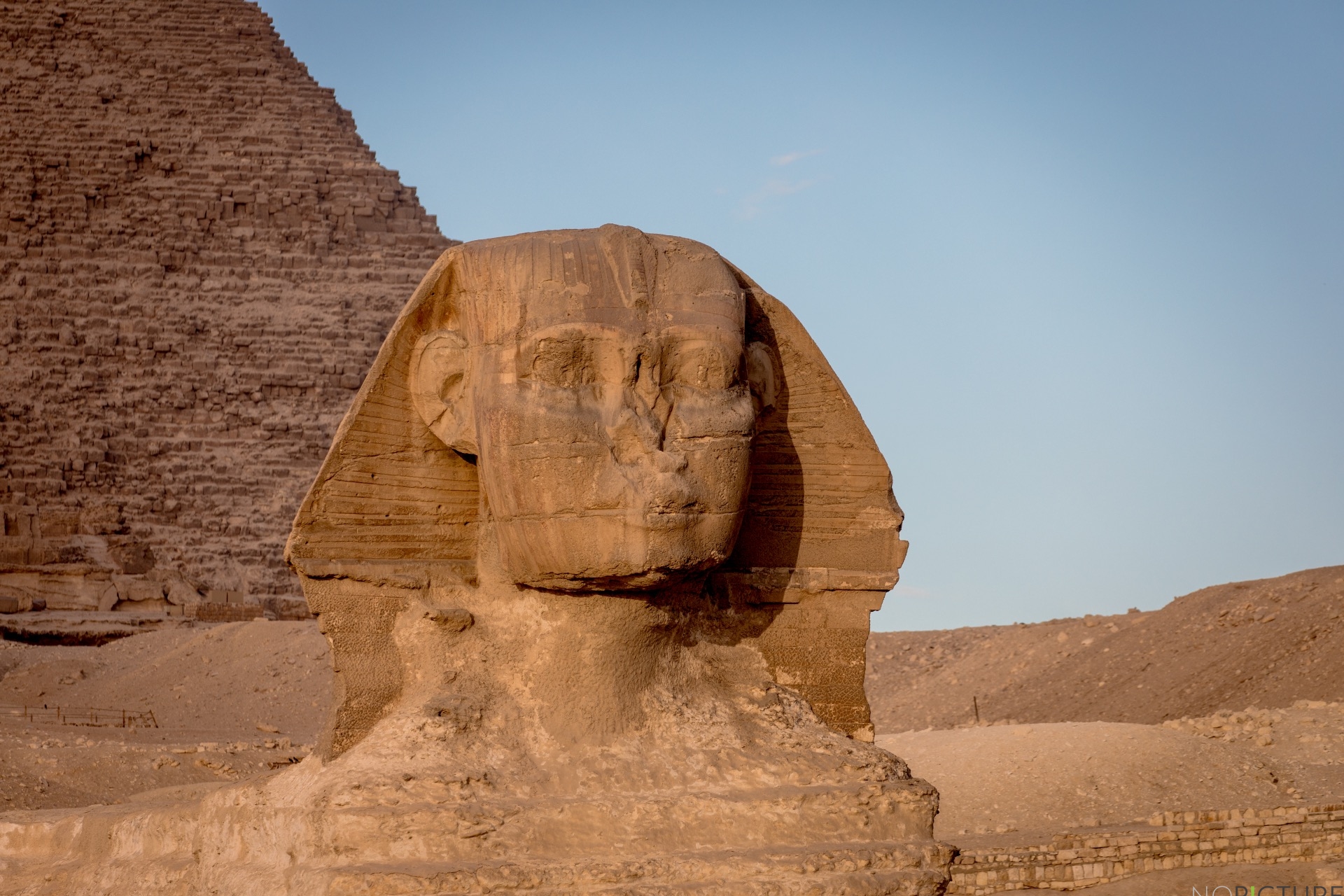
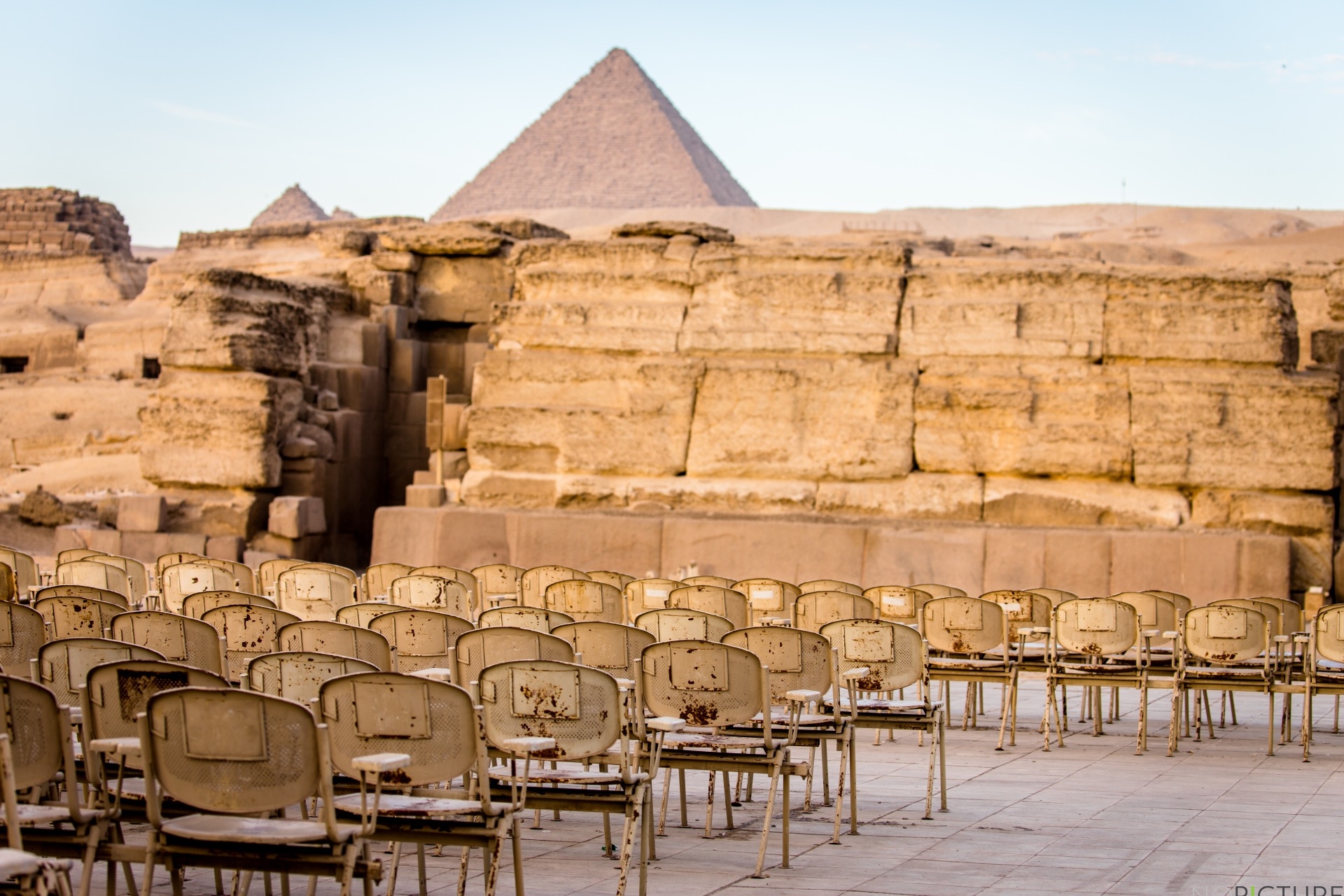
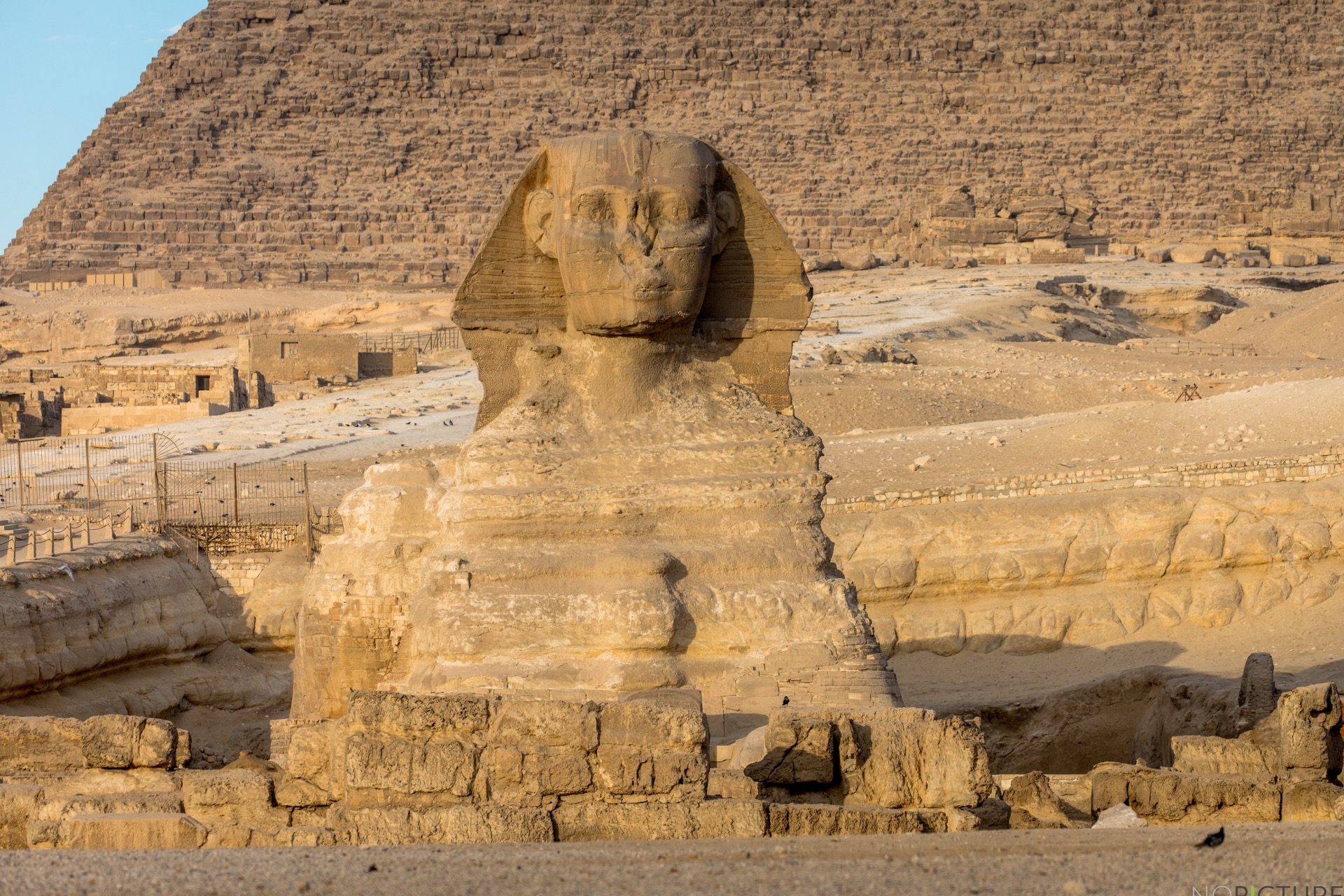
By taking the “local” entrance, you are immediately rewarded with a face-to-face encounter with the sphinx.
Somehow it feels unearthly to stand next to this stone witnesses of ancient history.
Early in the morning, the light is also softer, creating a gentle glow over the surroundings. This further enhanced our experience.
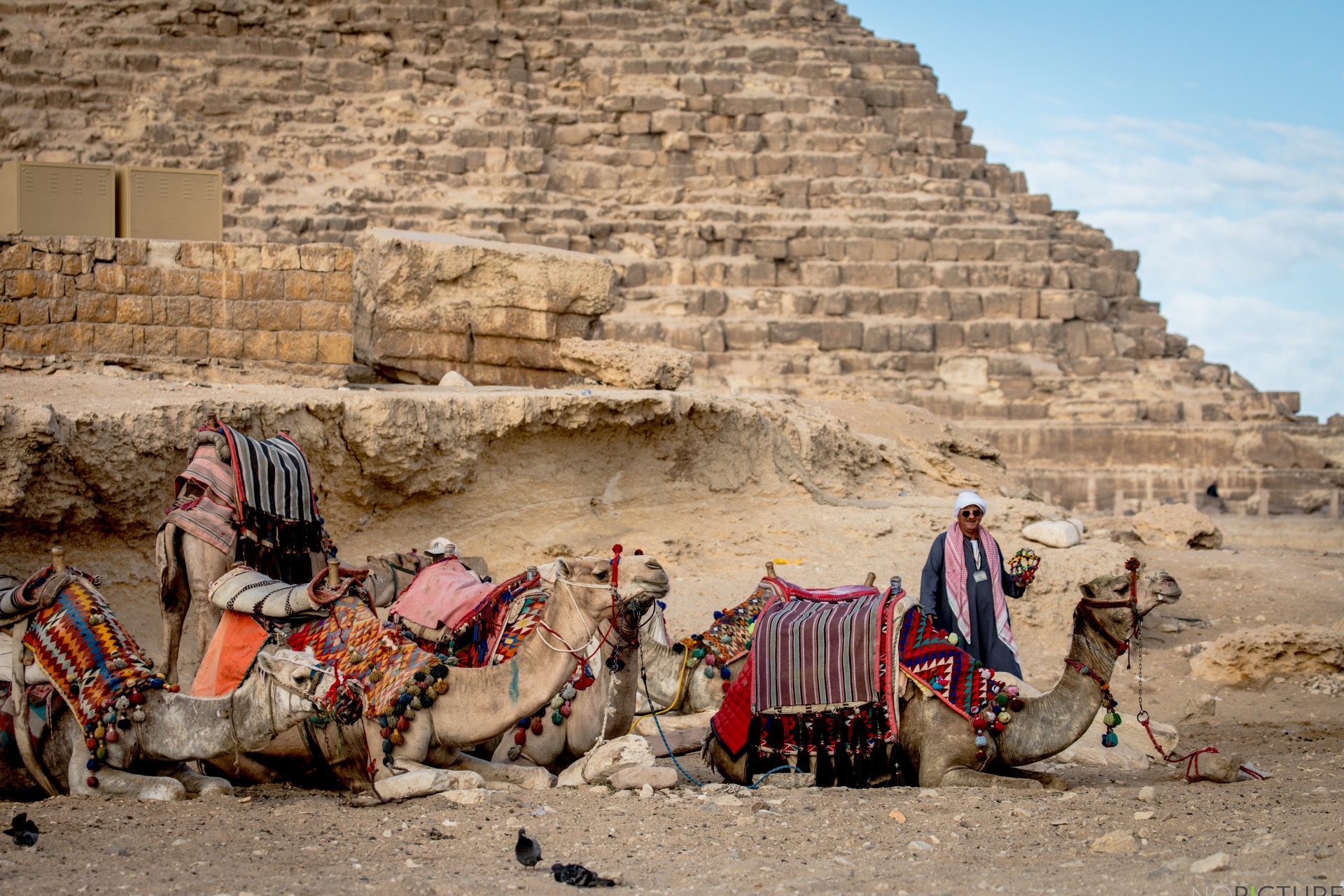
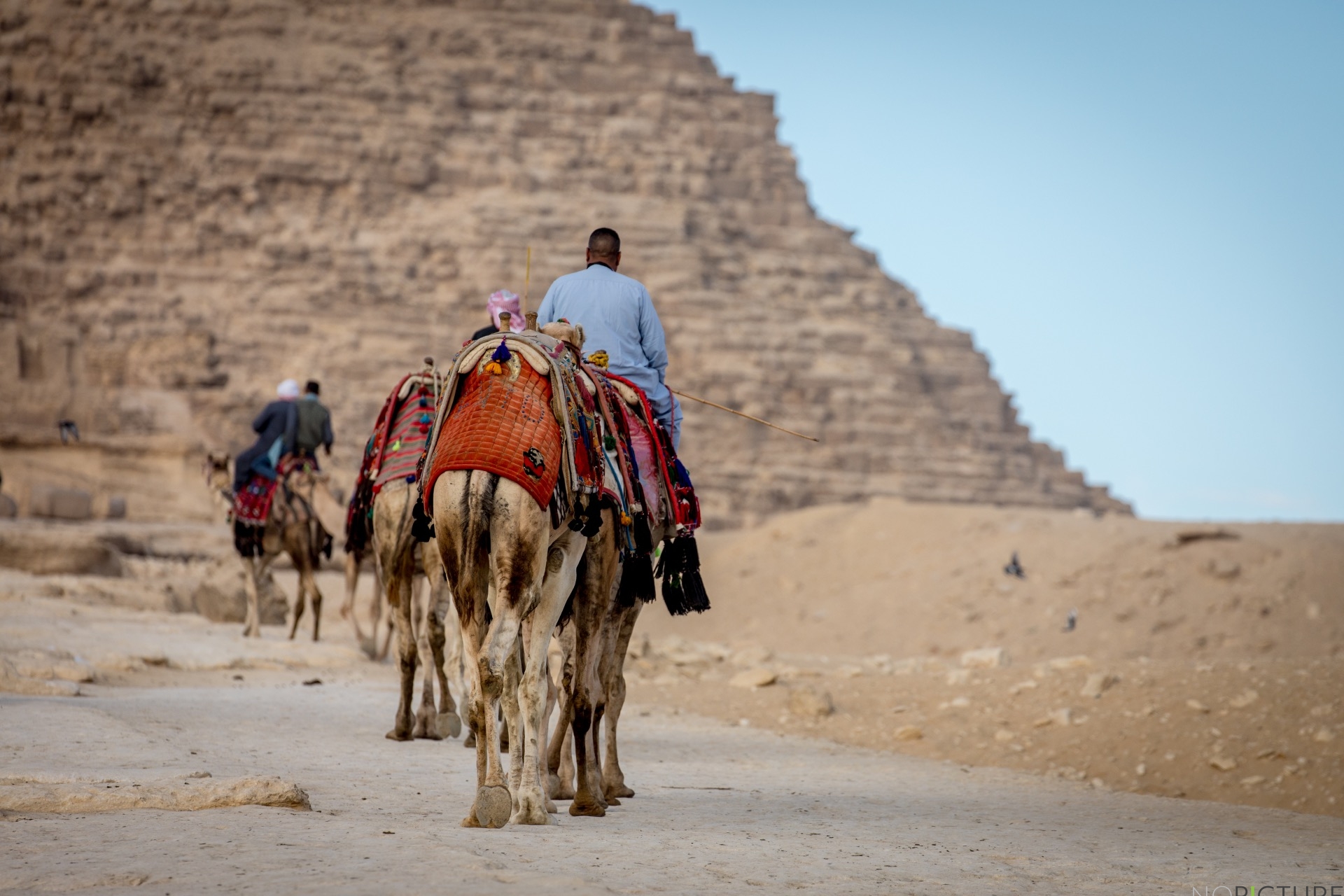
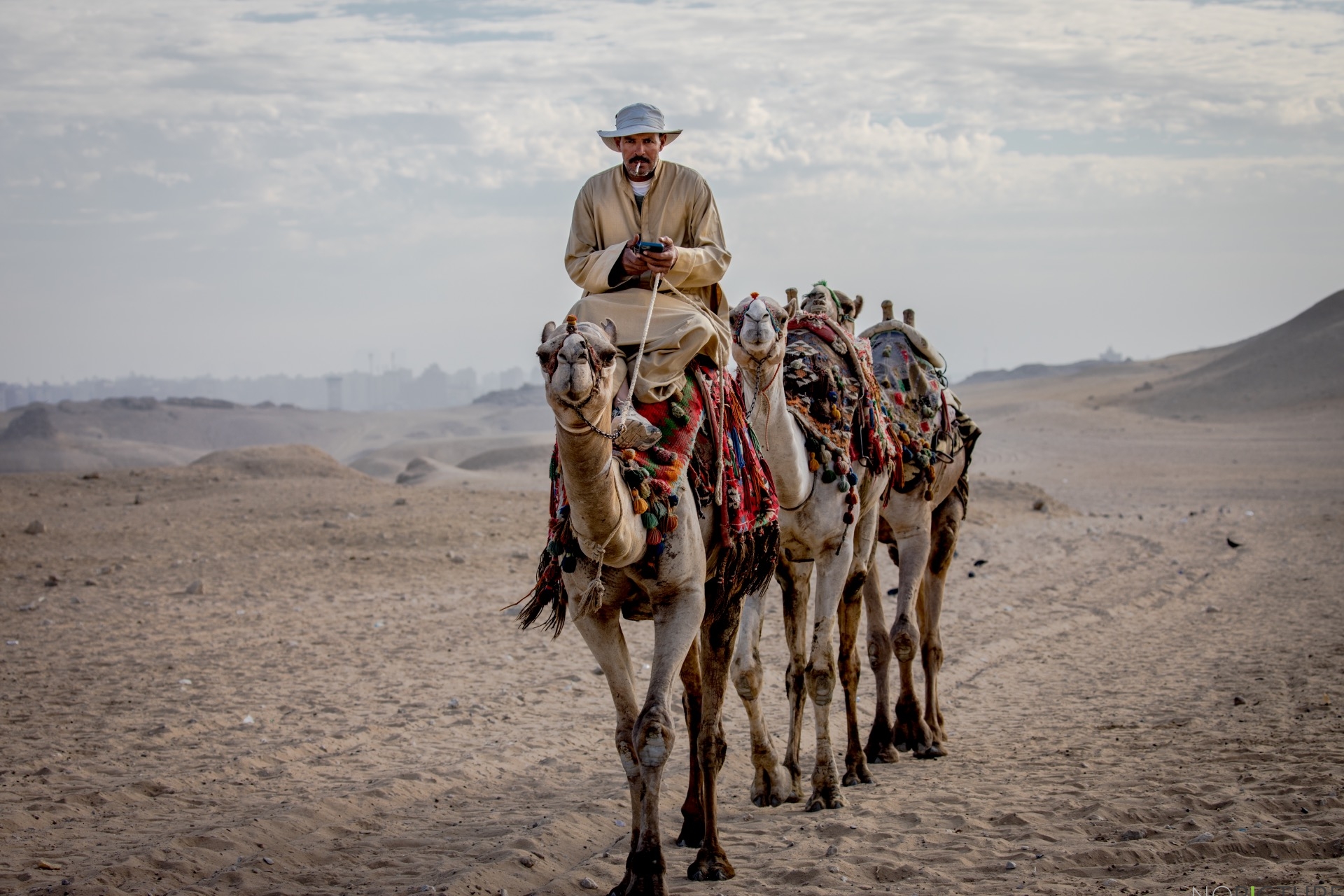
Fifteen minutes after we arrived, the first camels started to appear. They went to their strategic positions to tempt tourists into taking a ride. We stood our ground and walked from one pyramid to another because we wanted to enjoy the desert sand under our feet and go at our own pace.
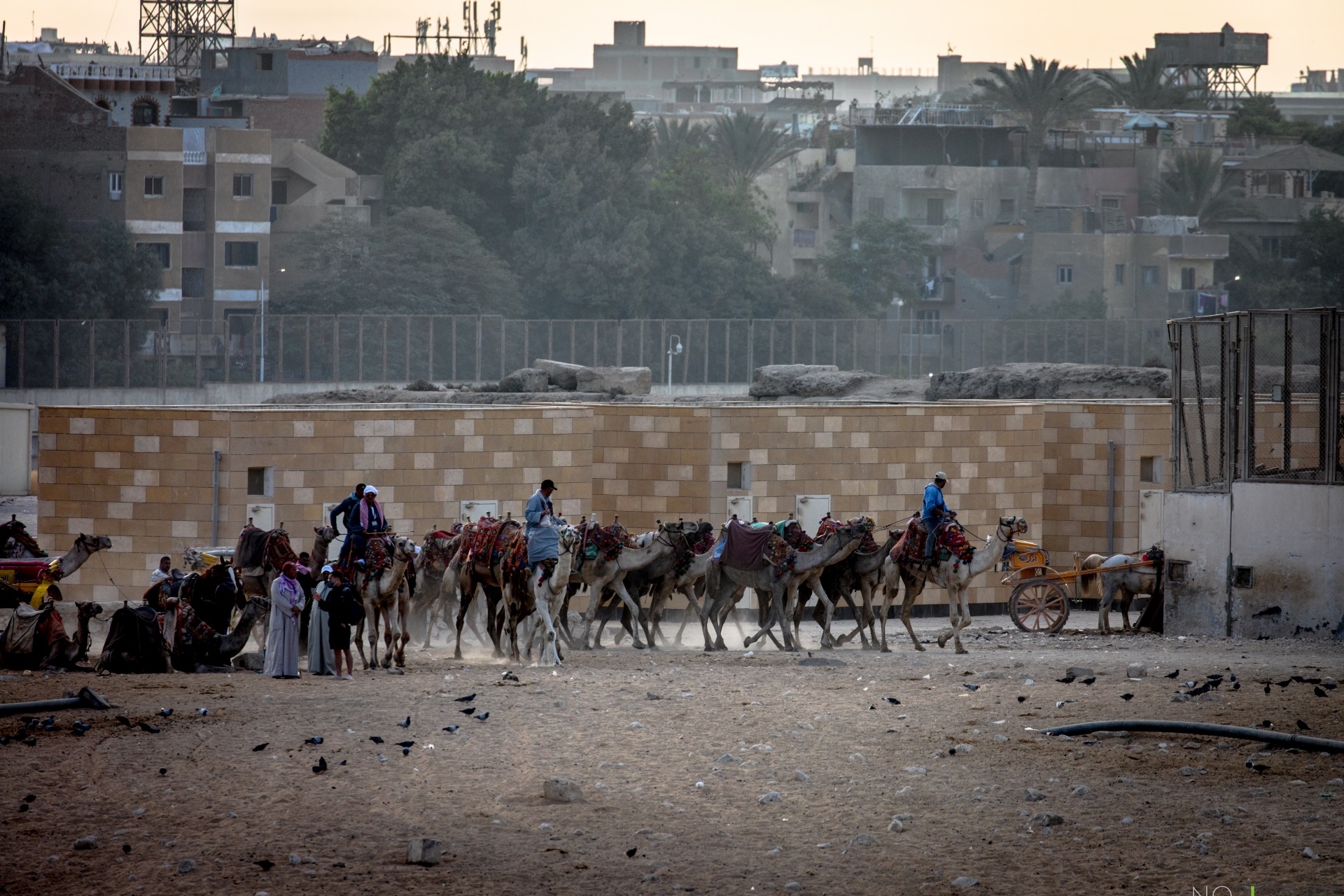
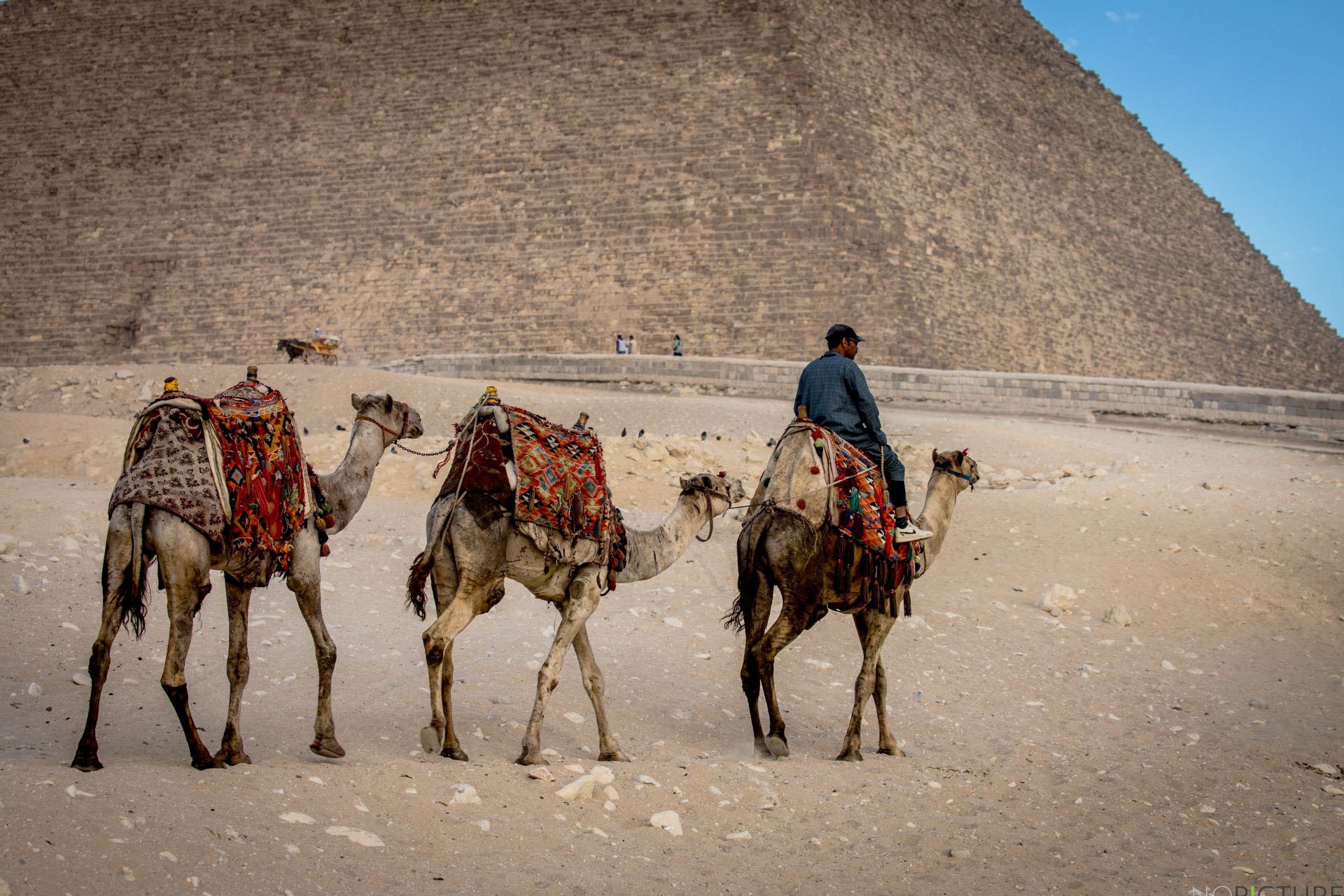
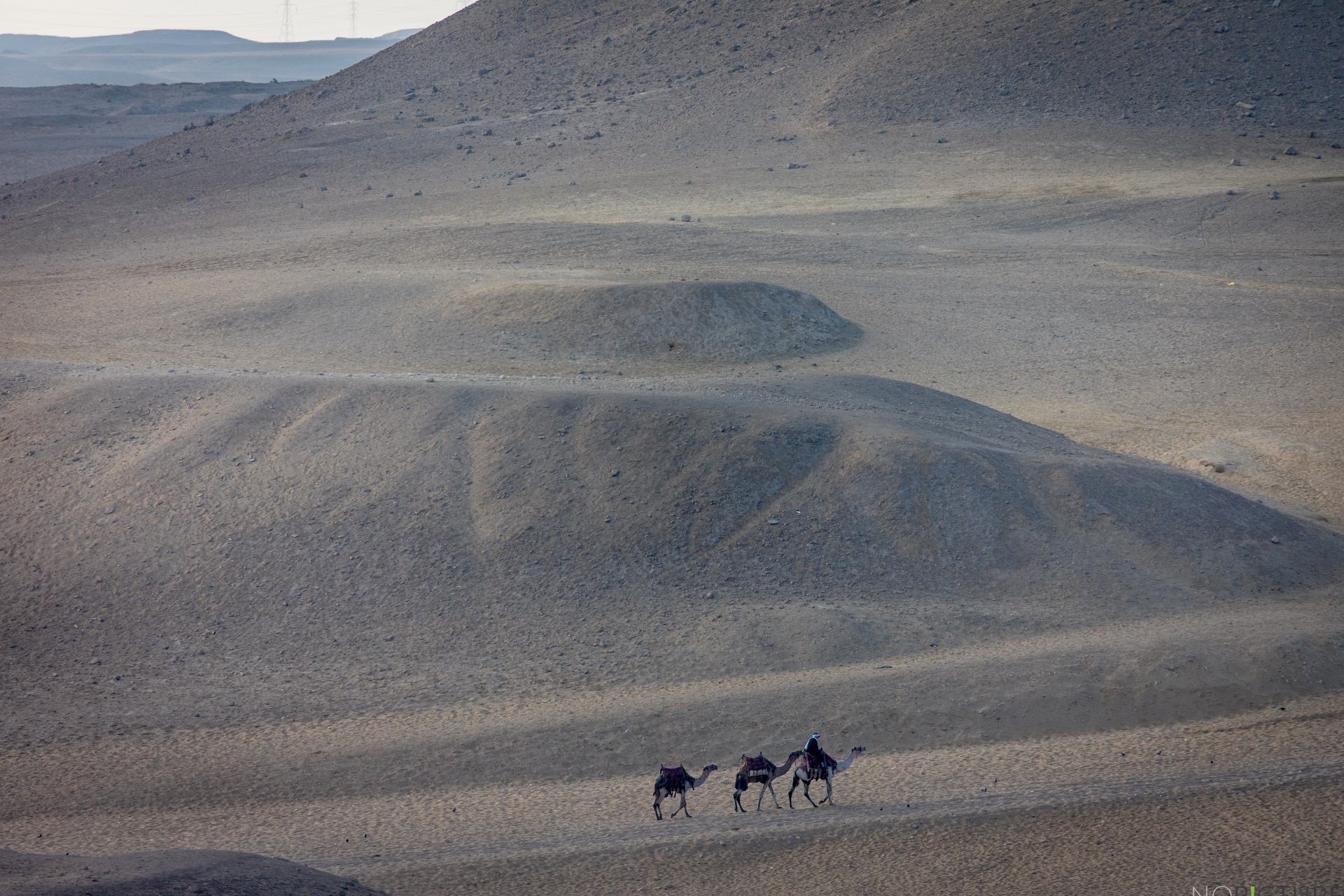
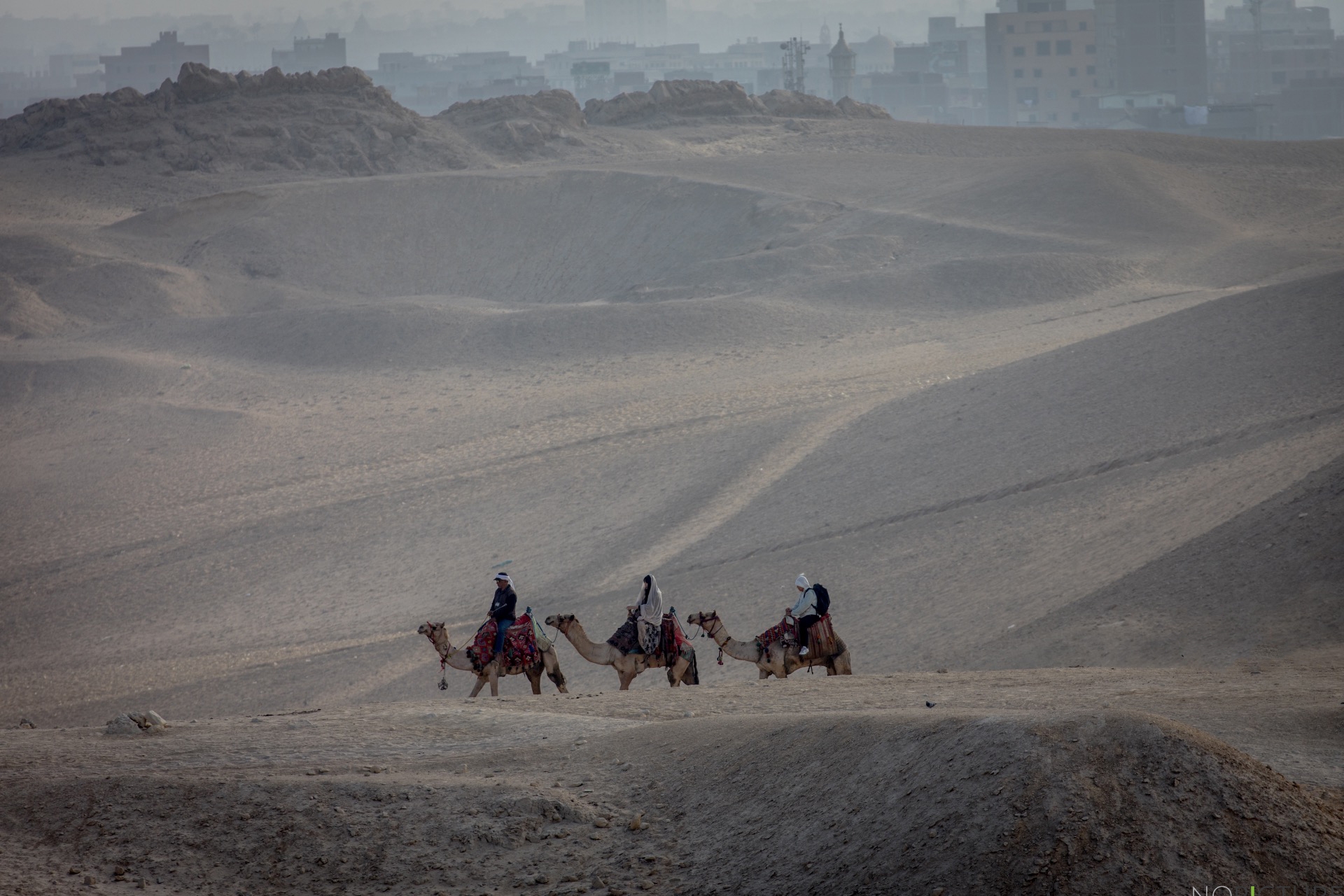
After an hour’s walk, we settled down on a dune ridge to enjoy the morning sun, the silence and the spectacular view.
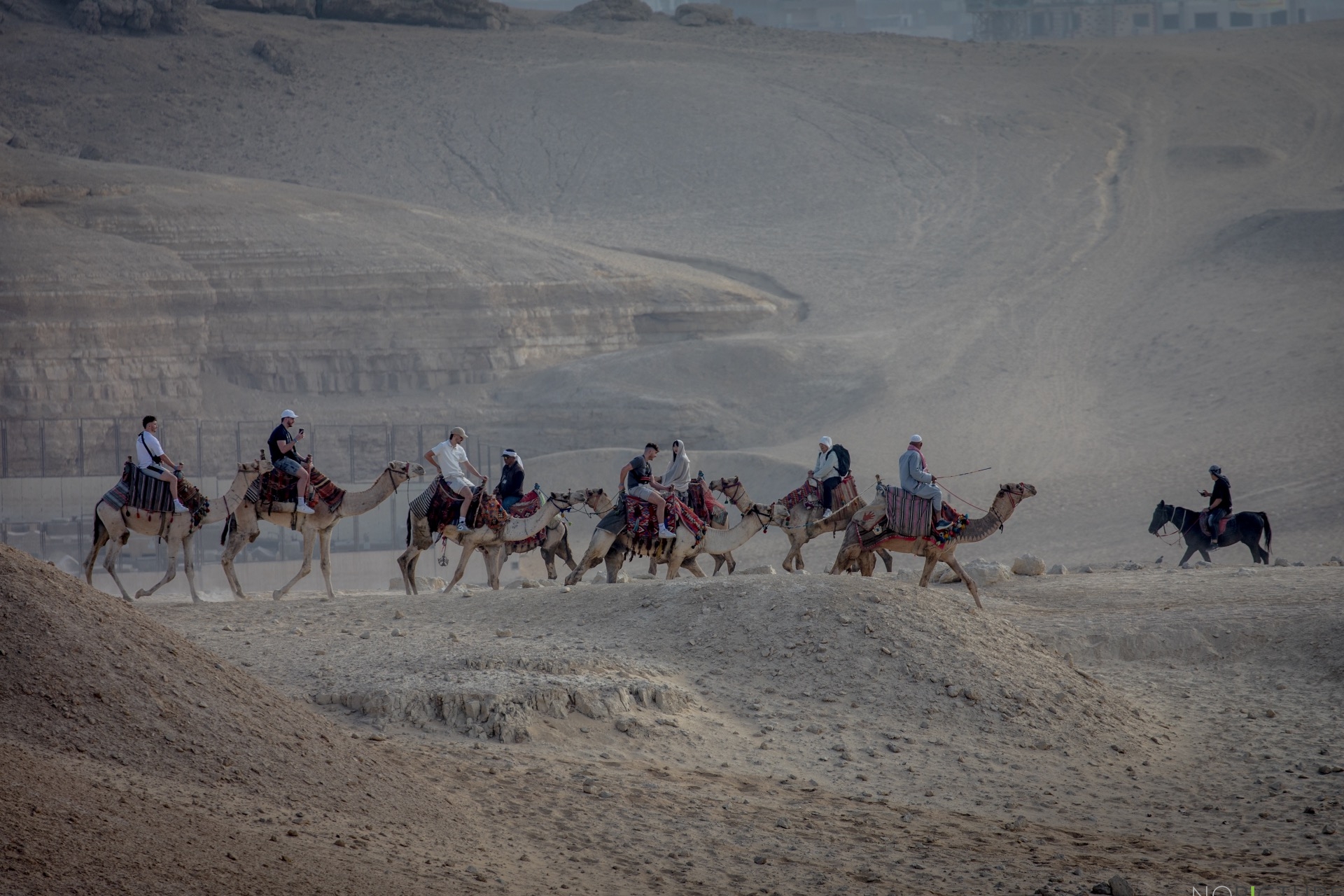
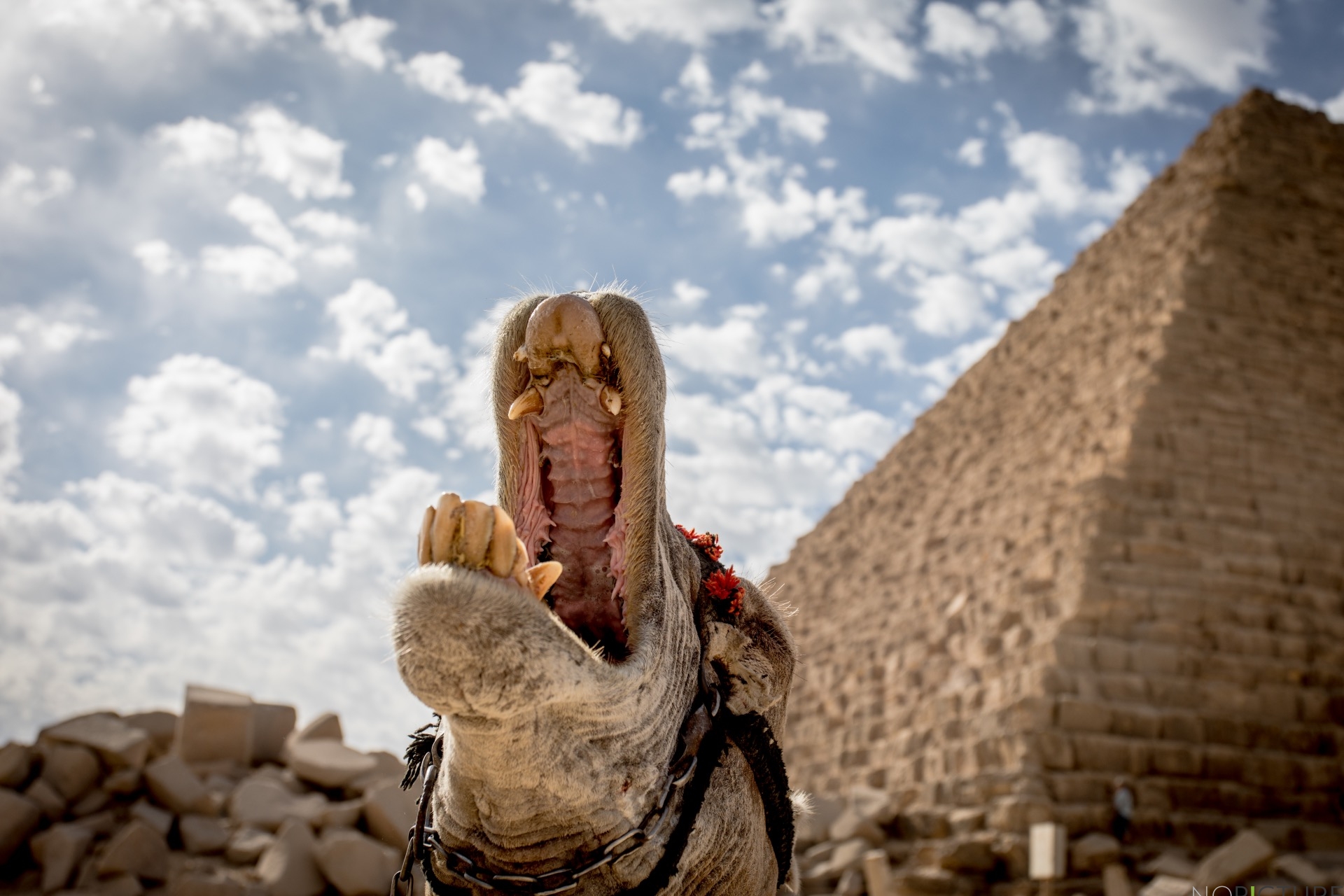
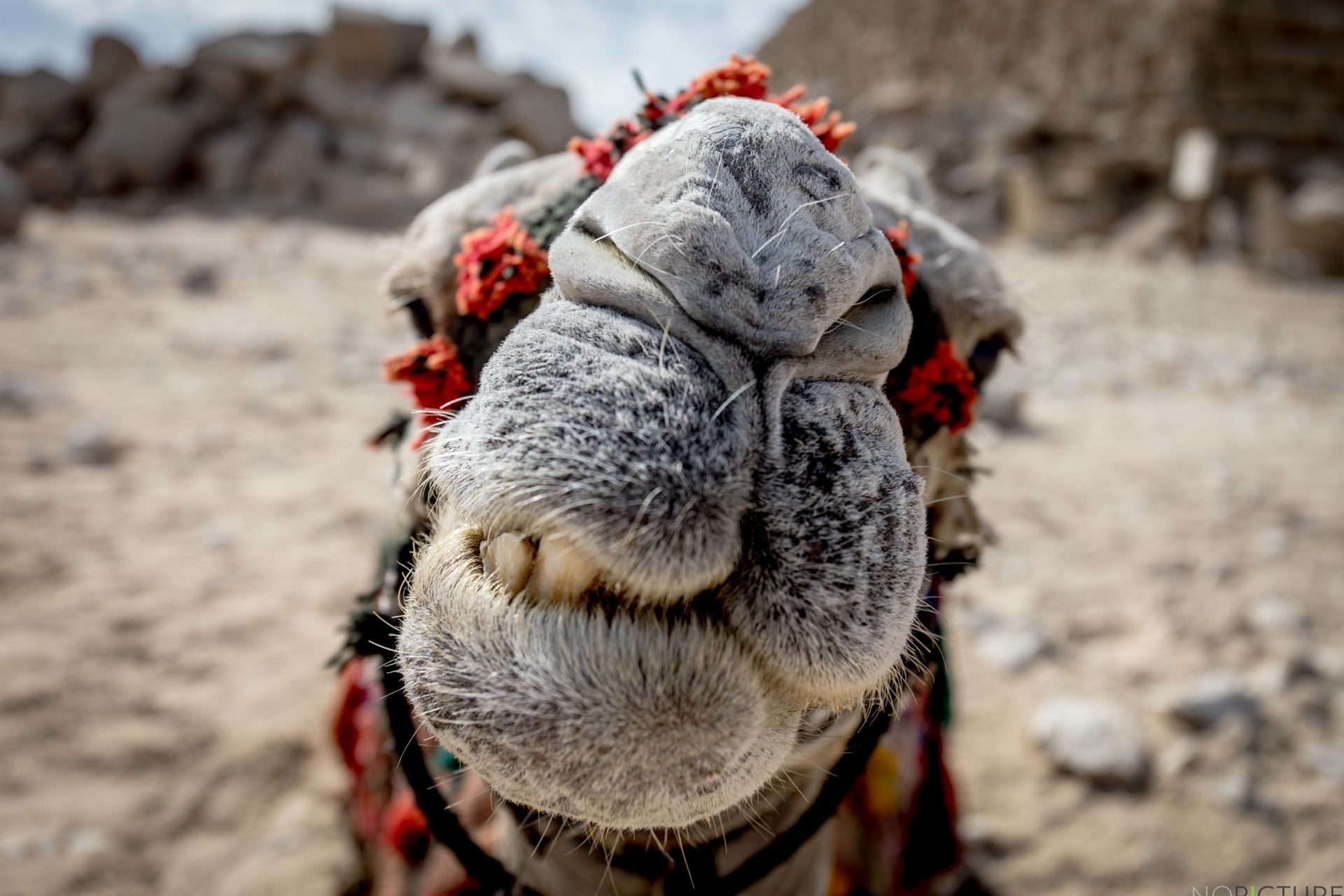
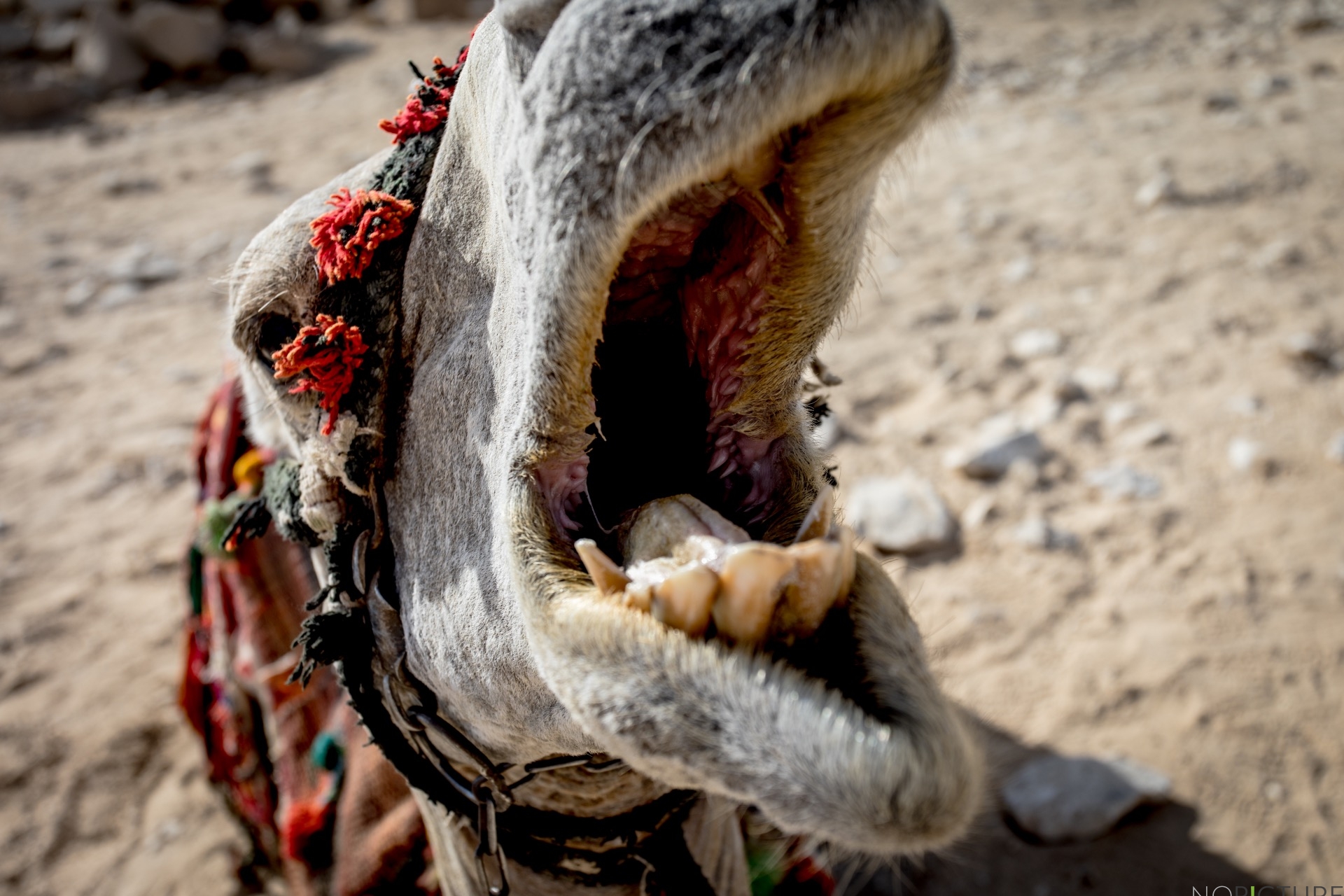
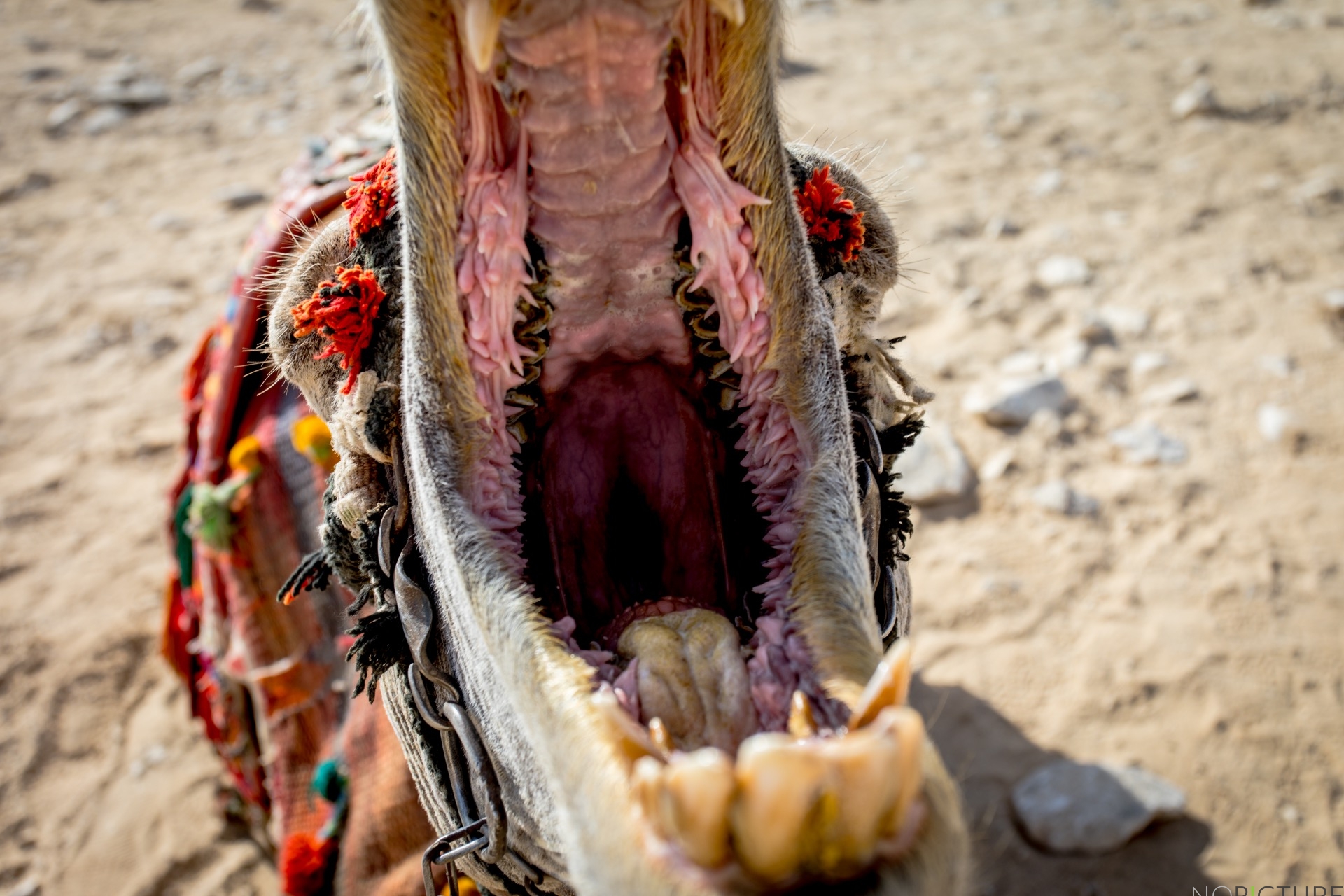
It was wonderful to see the camels slowly gliding by in the distance. They really earn their name as “the ships of the desert”.
A little further on, we had breakfast, which was prepared by our hotel, under the morning sun. As is only right, we didn’t leave a speck of rubbish behind.

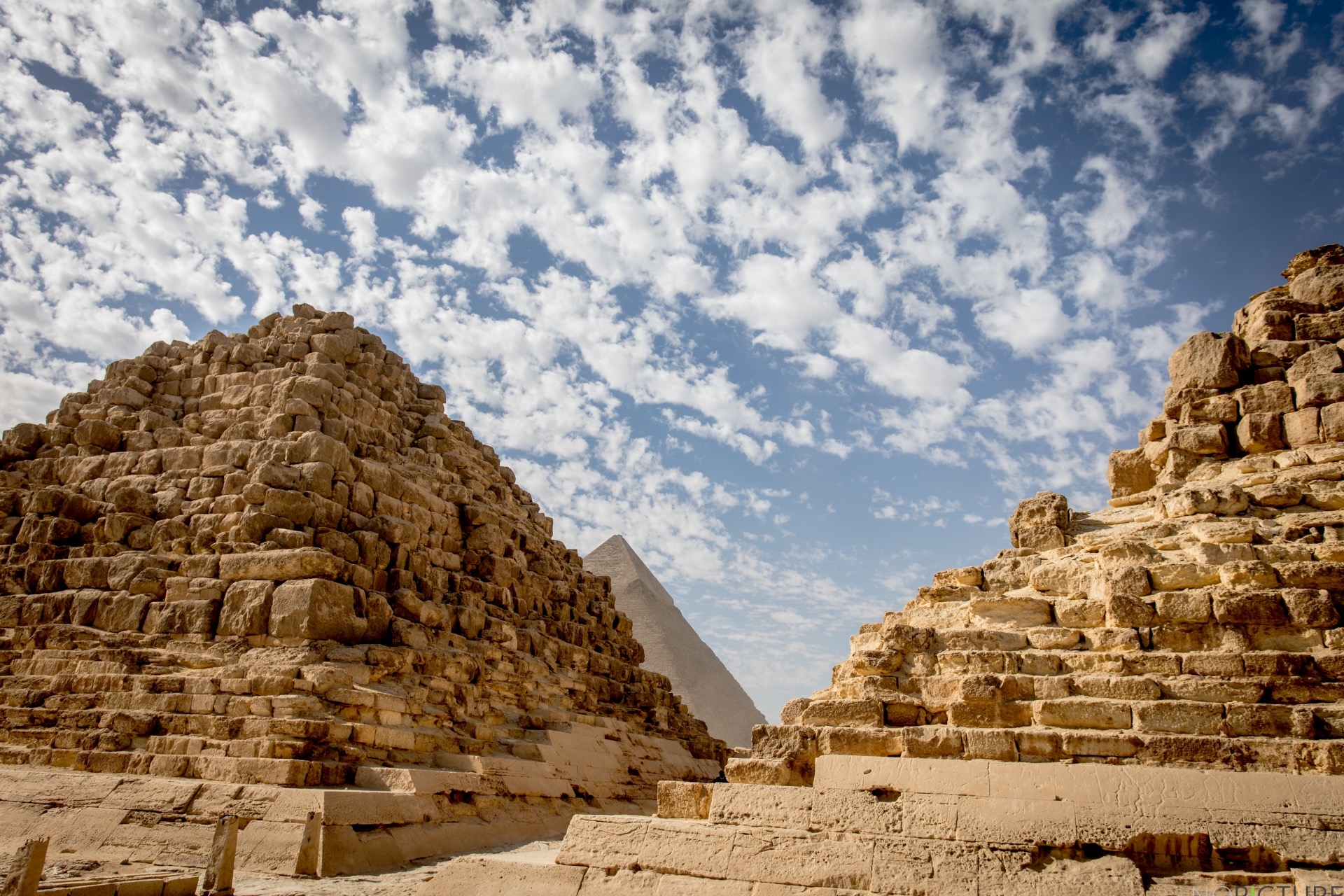
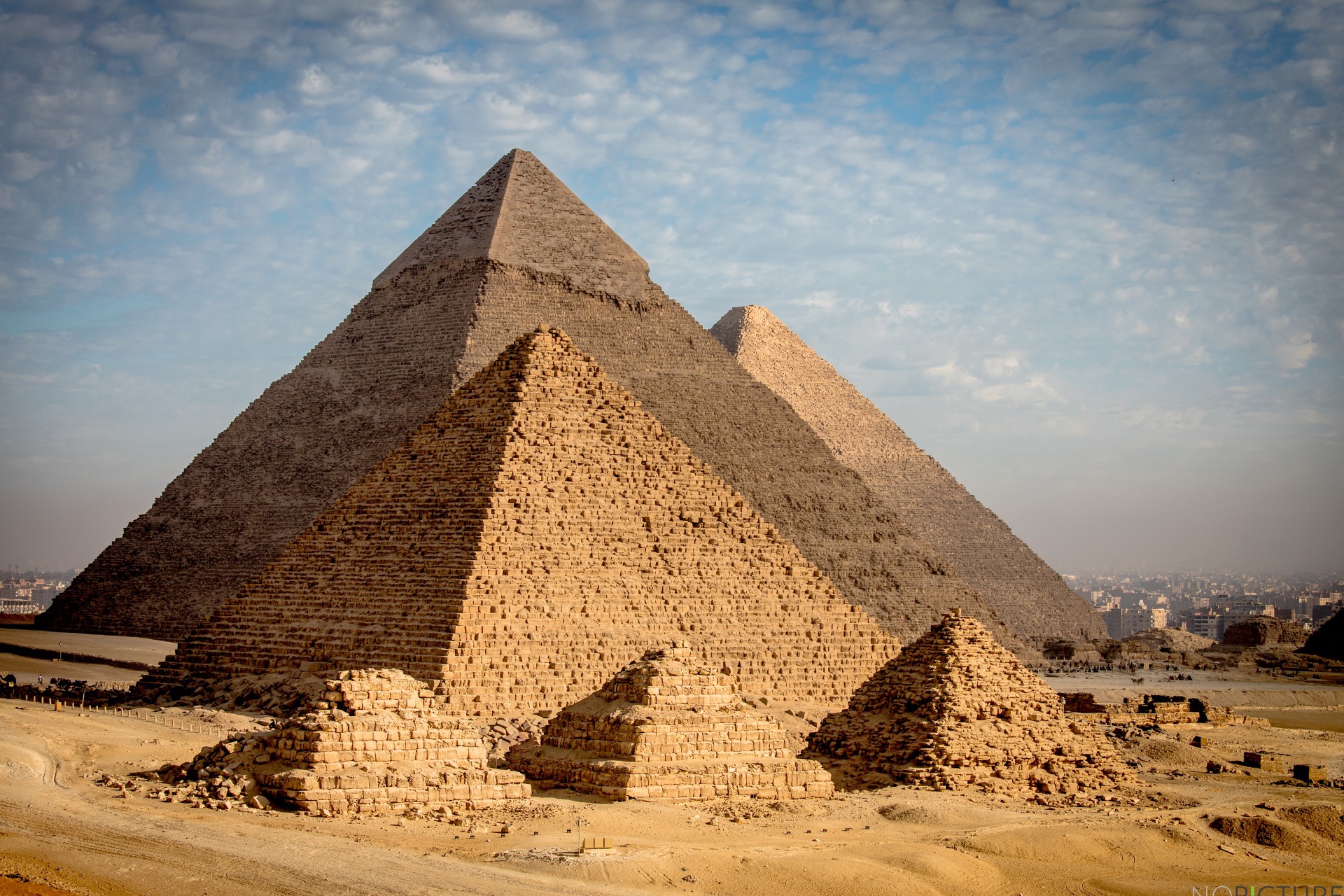
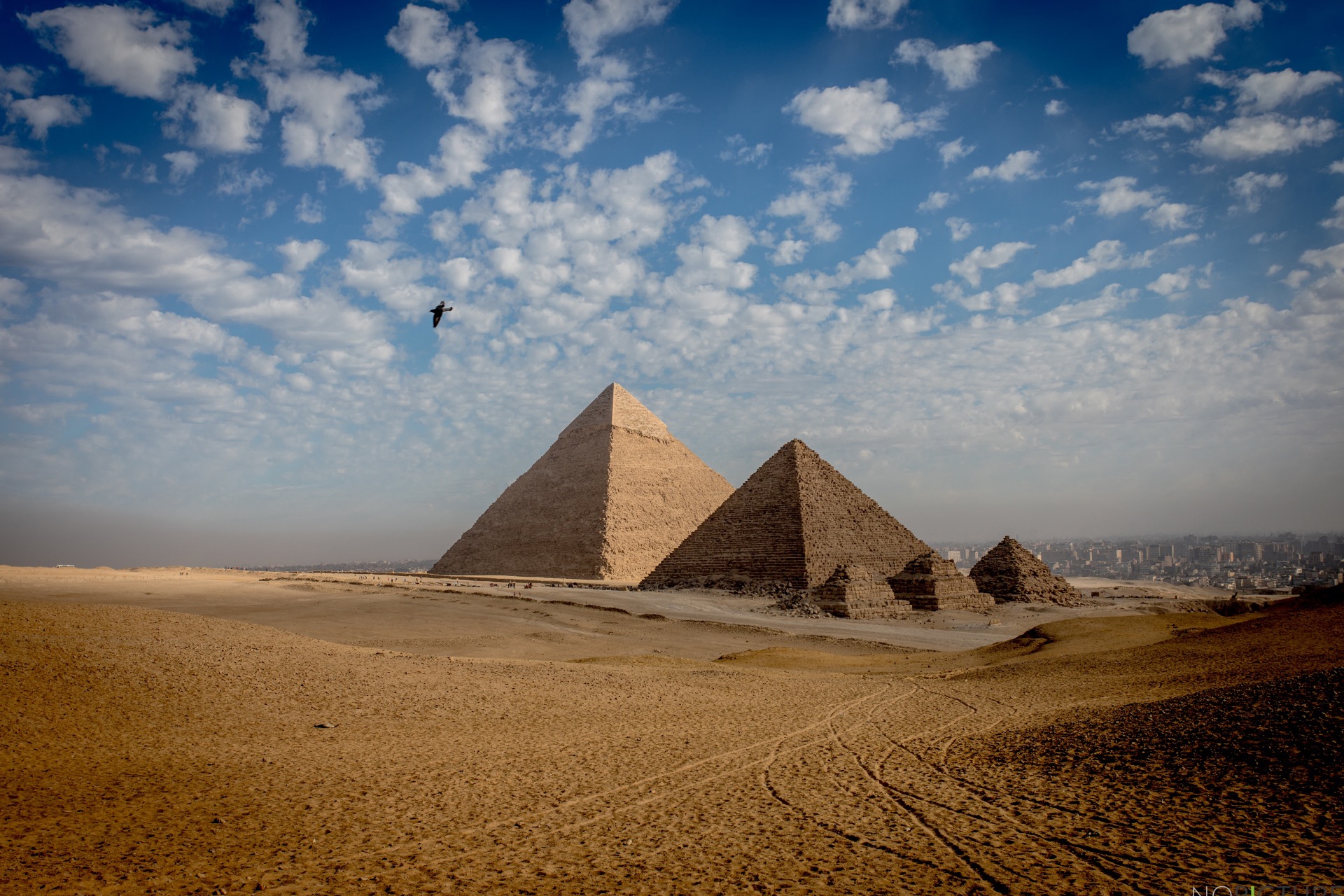
It is almost impossible to comprehend that 2.3 million limestone blocks were stacked by hand to form a 138-metre-high pyramid with a total weight of 5.75 million tonnes! The Great Pyramid has a base measuring 230 metres. And, as you would expect, the entire site is a UNESCO World Heritage Site and one of the Seven Wonders of the World. Standing next to the Great Pyramid, you realise just how colossal it is. We didn’t go inside, as all the pyramids were plundered long ago and there is nothing left to see.
But we did visit something else.
Next to the pyramids lies a field with lots of small flat-topped hills arranged in a grid pattern. It is a cemetery, or mastabas.
They were used for the burials of relatives or officials of the kings.
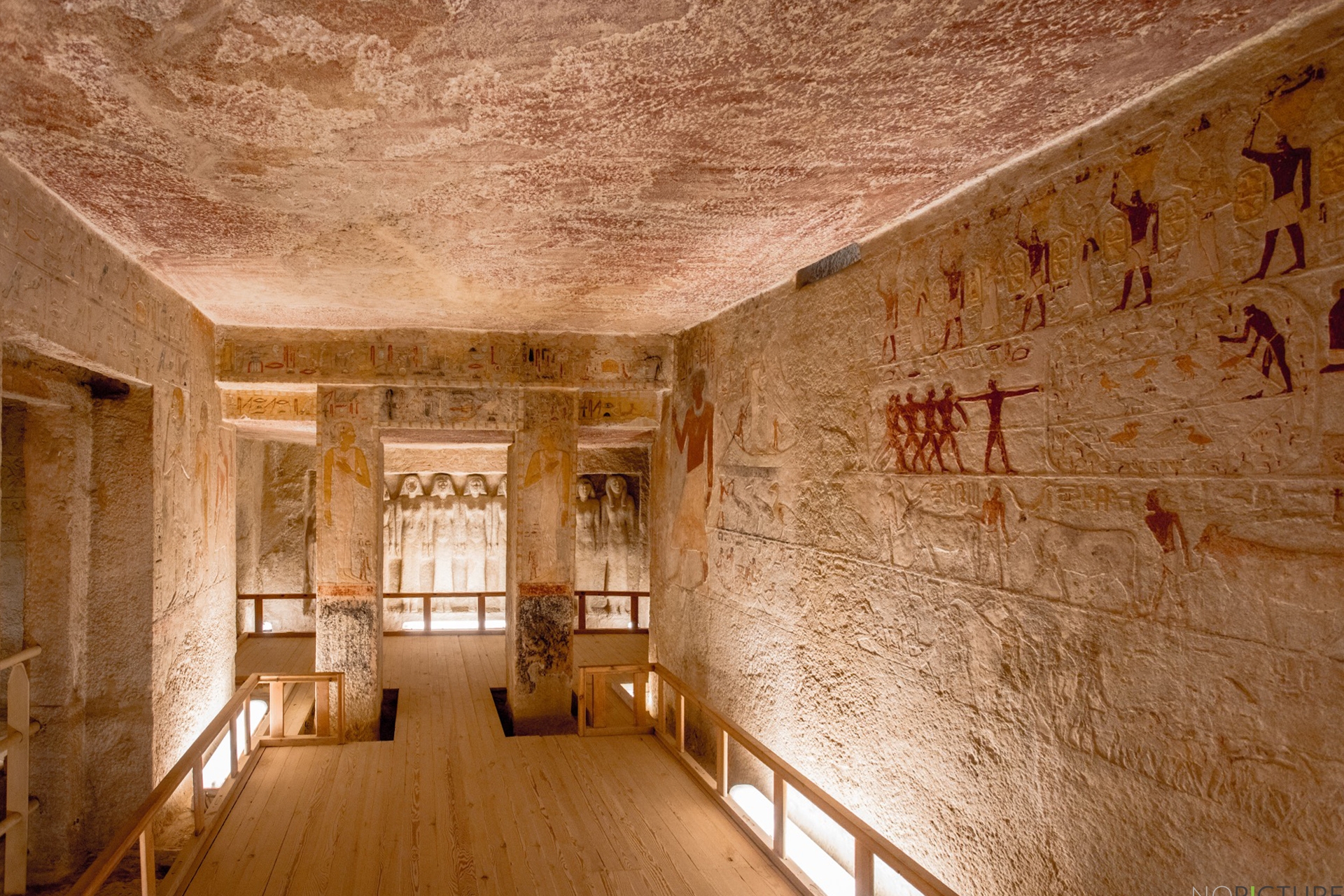
The mastaba we visited was the Tomb of Meresankh III, Queen and Wife of Khafre, who built the middle pyramid.
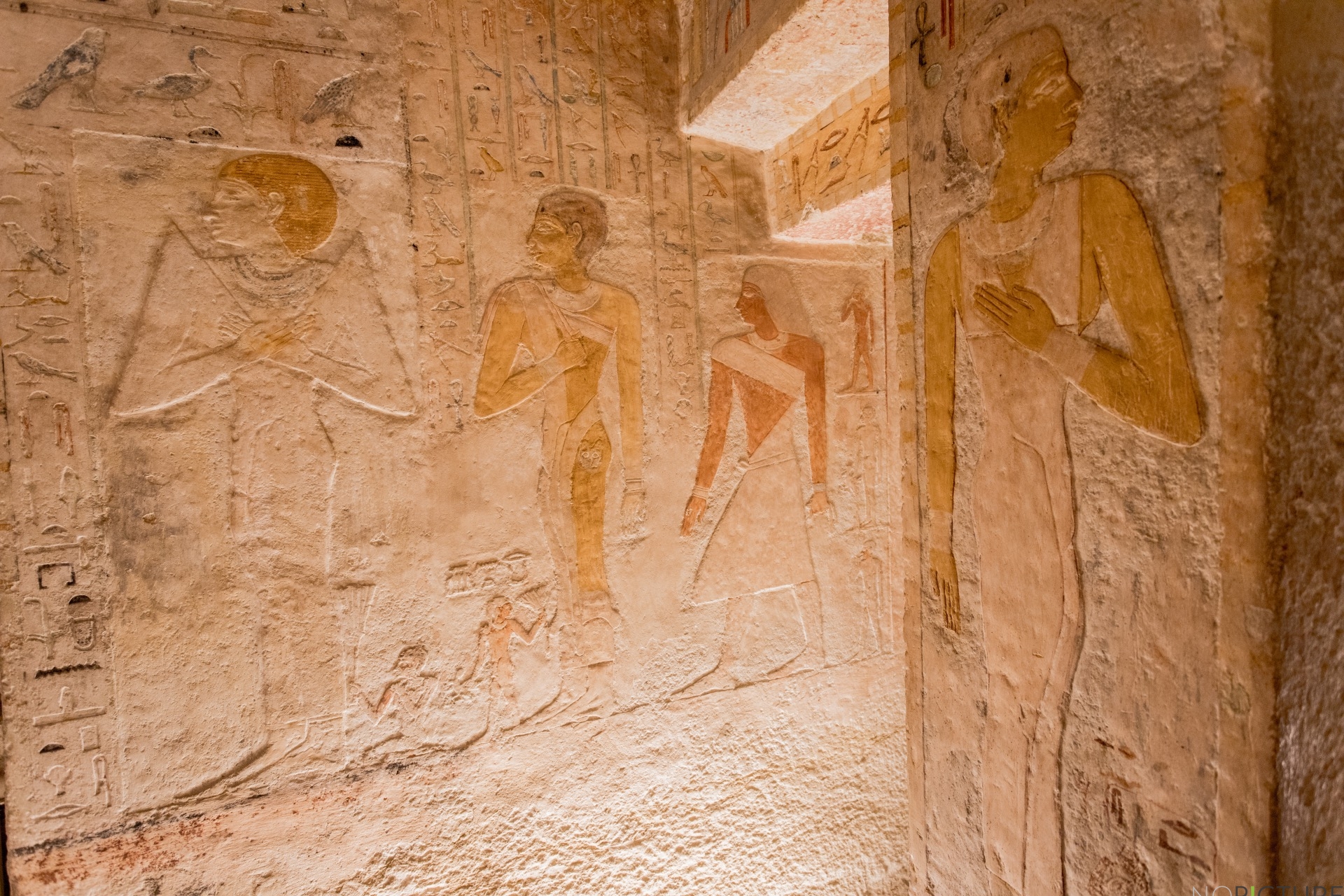
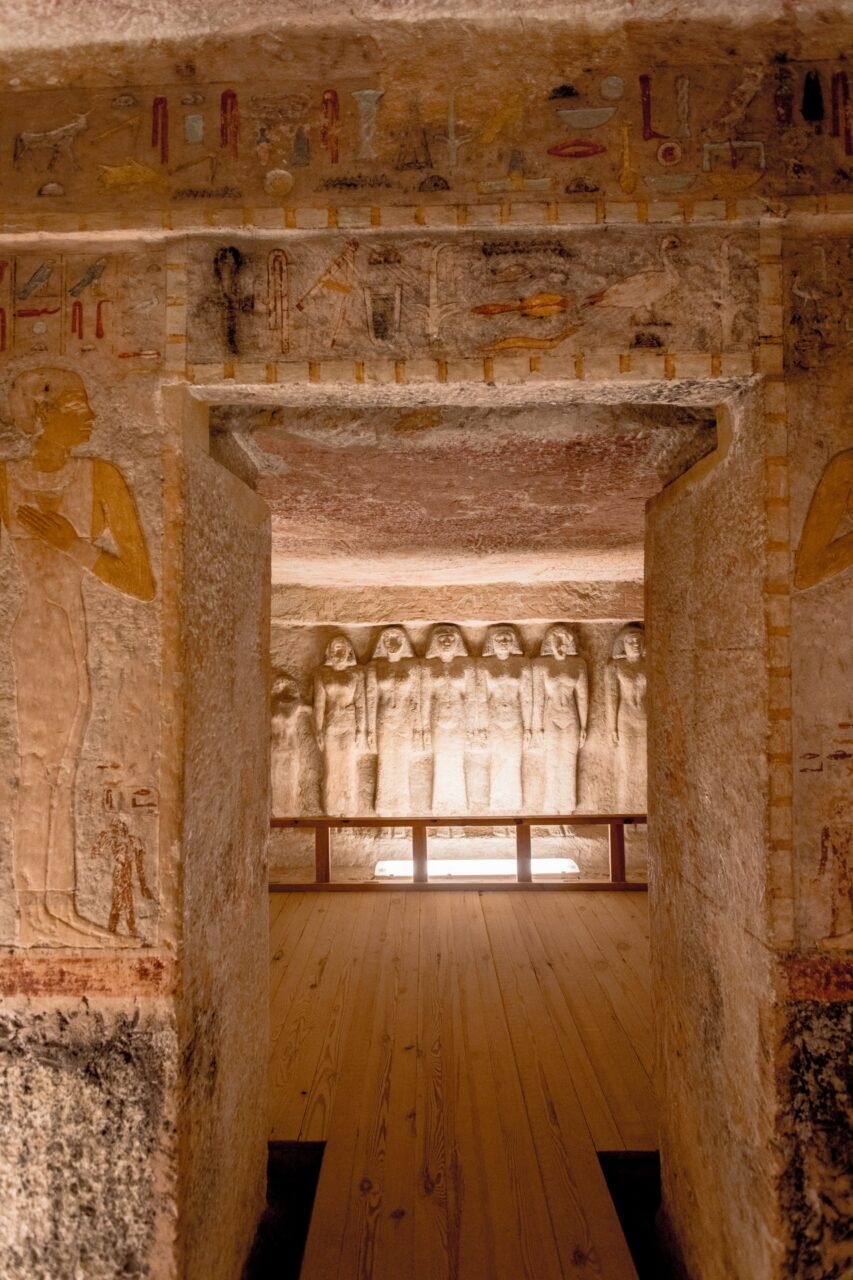
It was beautifully decorated with painted reliefs and carved figures. The tomb had three chambers, the rear one of which contained 10 beautiful carved female statues.