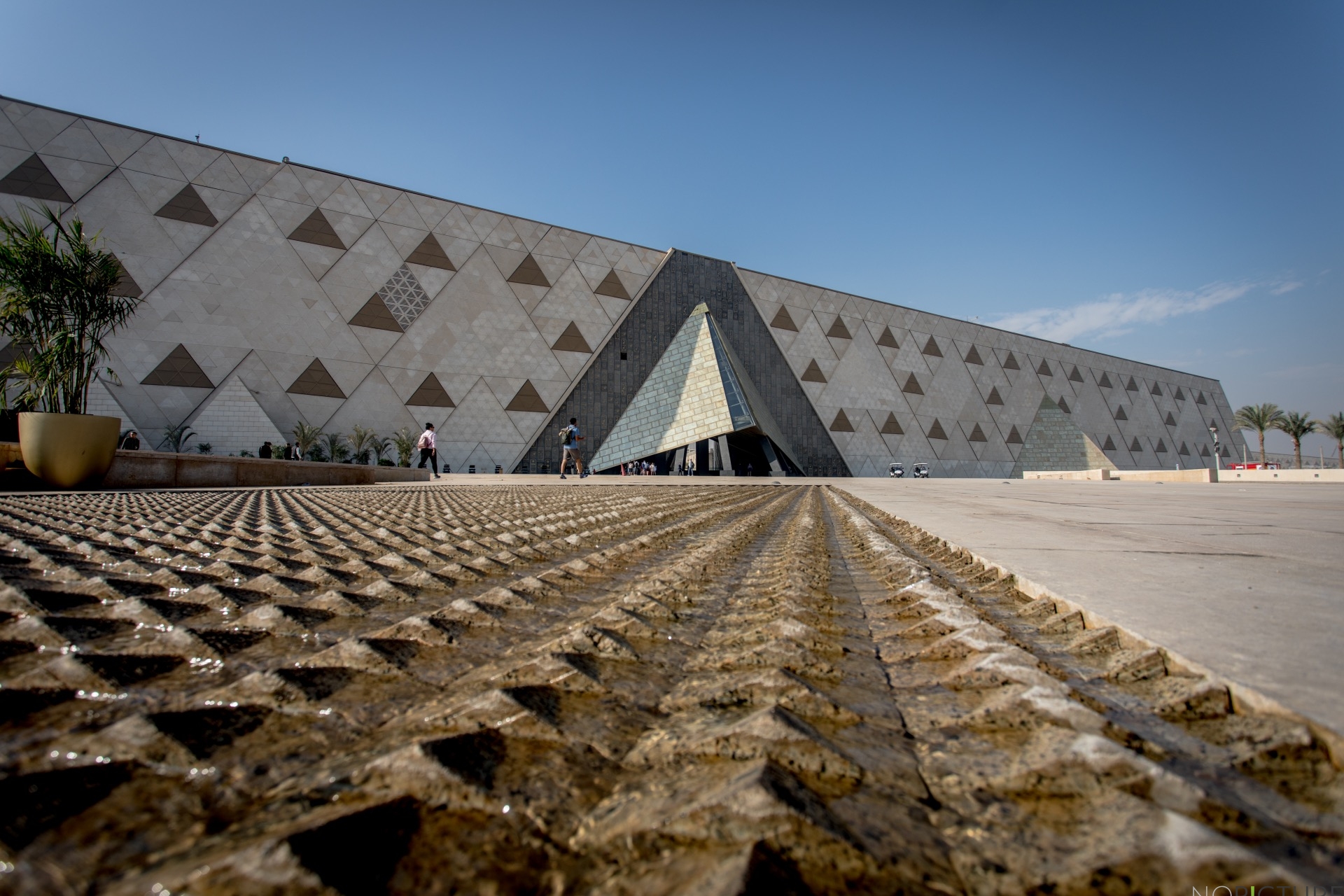
The Grand Egyptian museum or GEM is indeed a gem in capital letters. Designed by Heneghan Peng Architects from Ireland and constructed by the Belgian based company Besix together with Orascom Construction PLC based in Egypt.
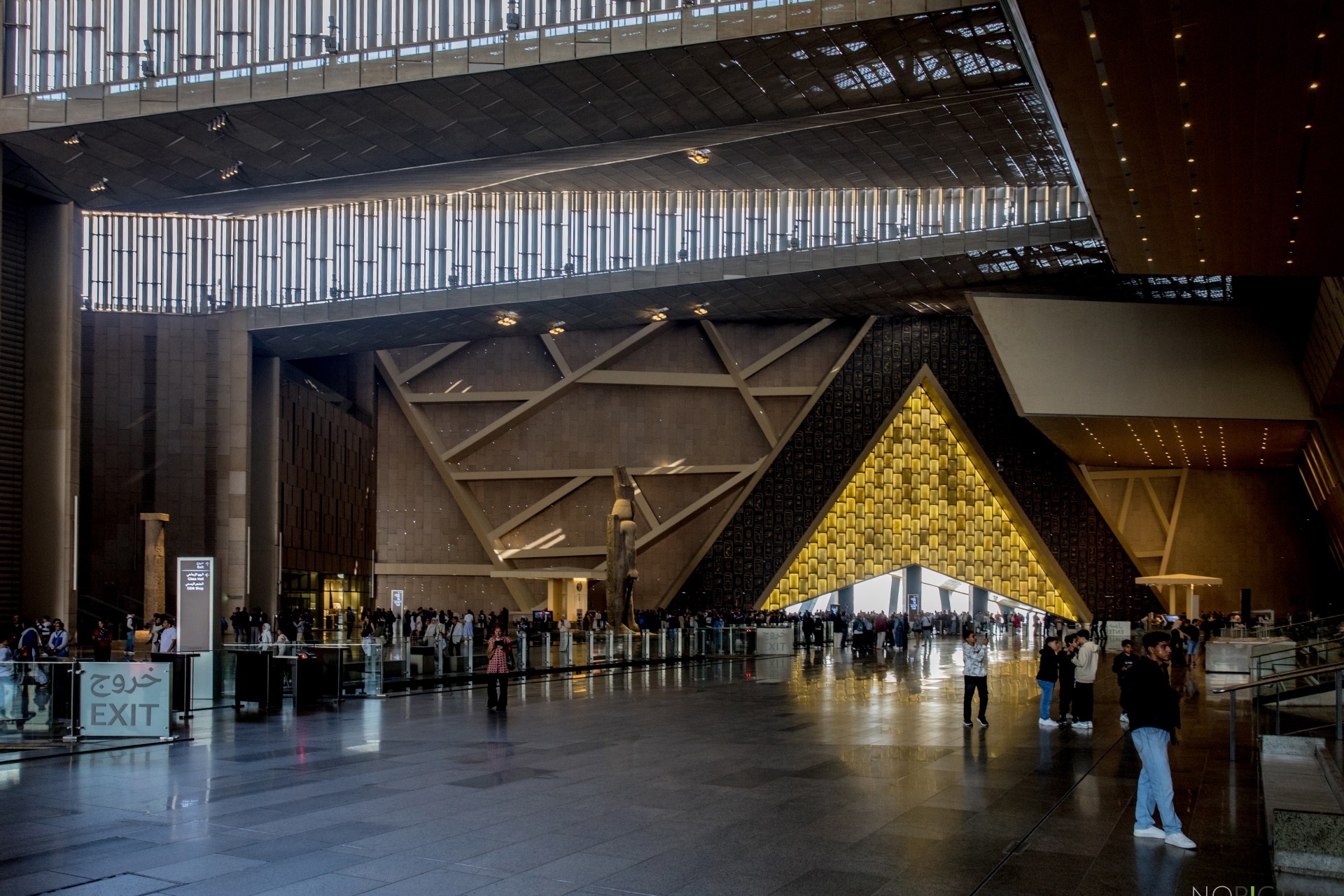
From the outside the building is massive but once inside it doesn’t feel that way.
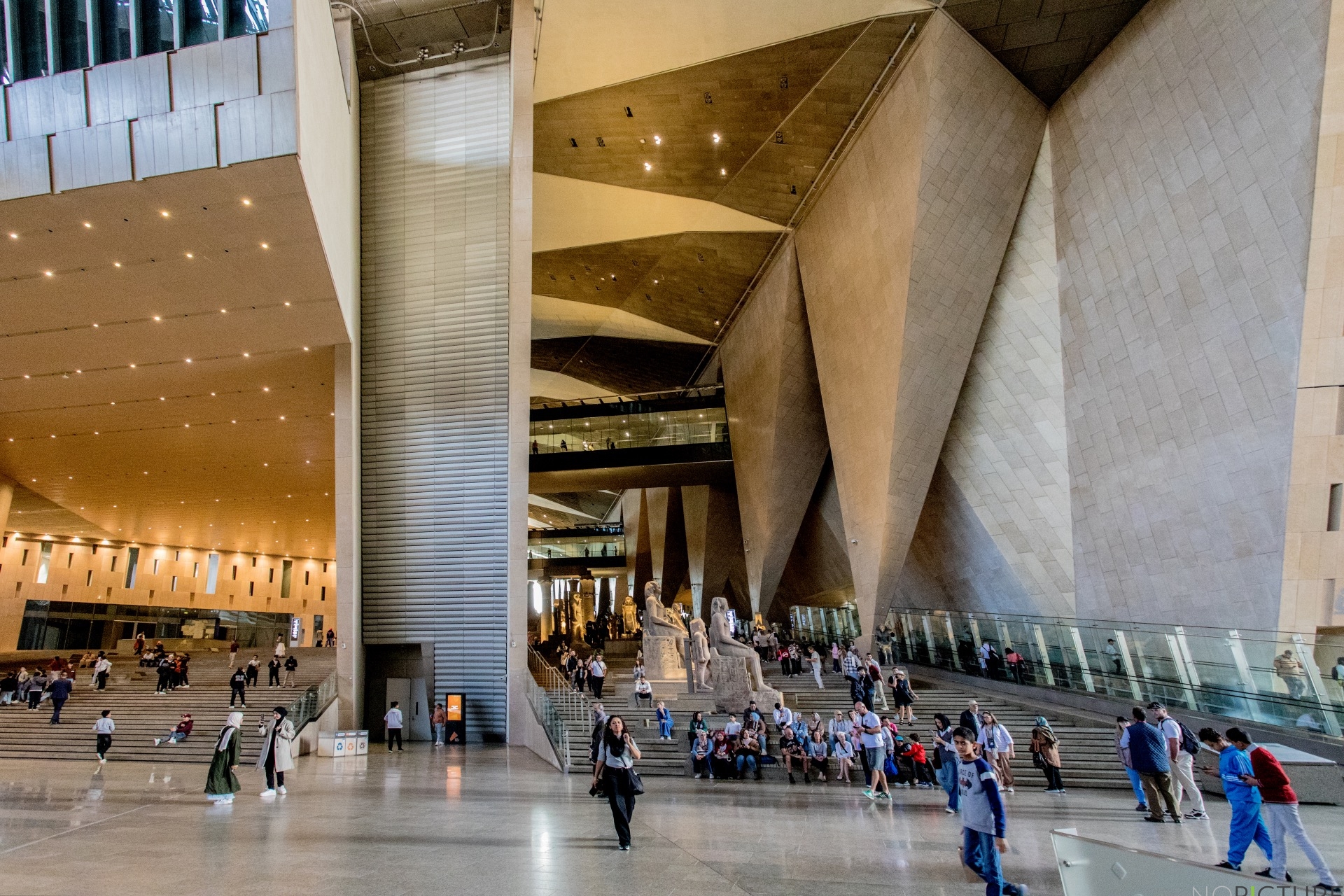
The atmosphere feels intimate and airy, thanks to the triangular alabaster window at the top of the entrance that transform the bright sunlight into a satin-like glow.
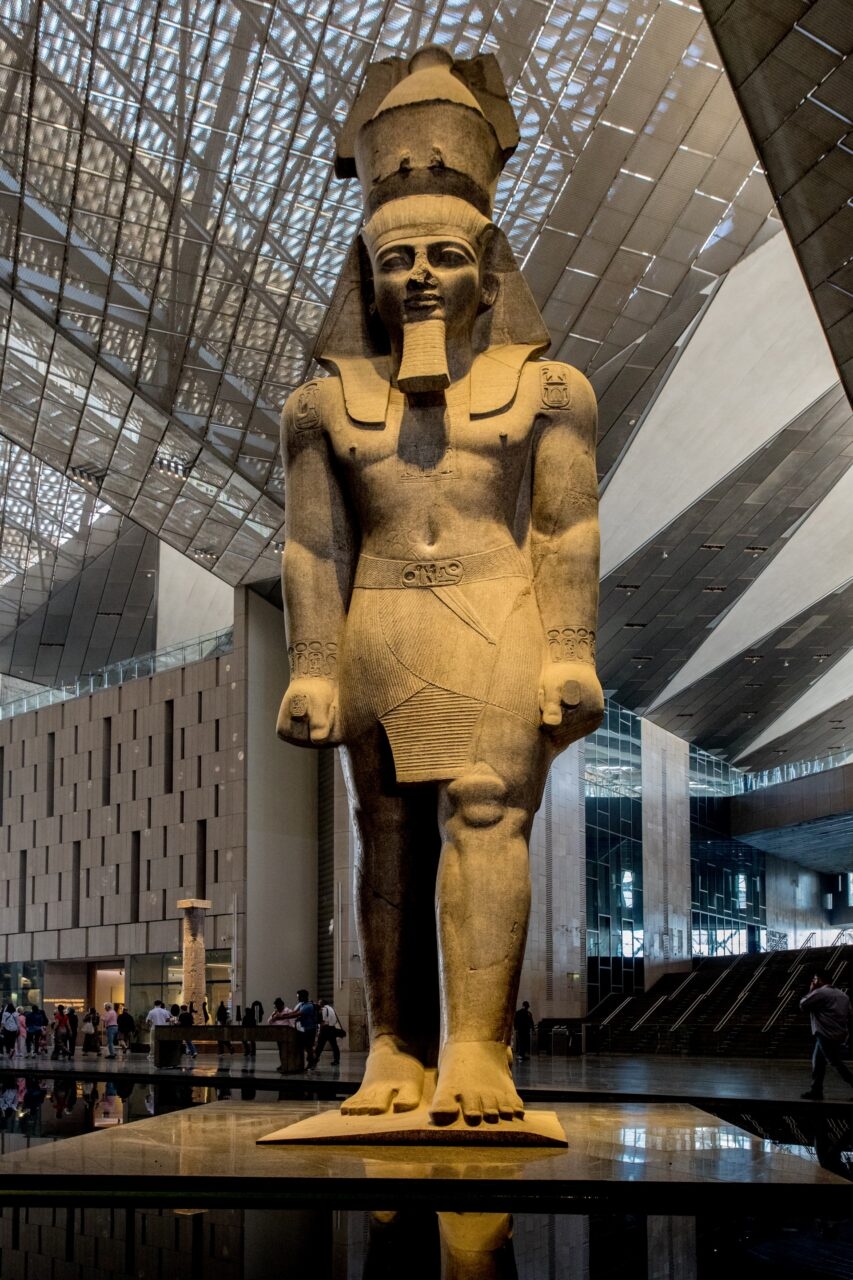
First thing you notice when you enter the Grand Hall is the red granite statue of King Ramesses II.
Weighing 87 tons and with a height of 11,3 m it is both dominant and fragile in the immense volume of the hall.
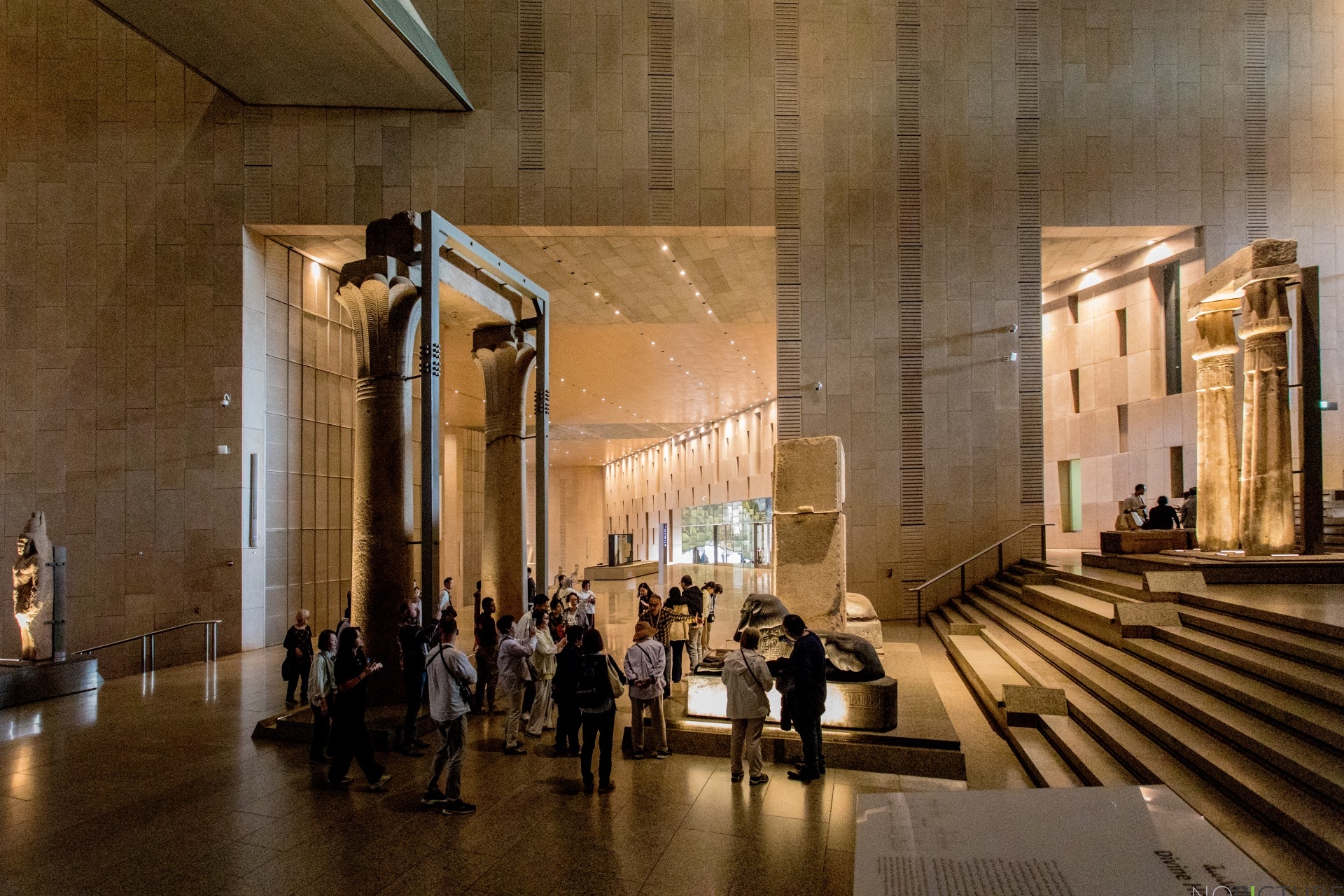
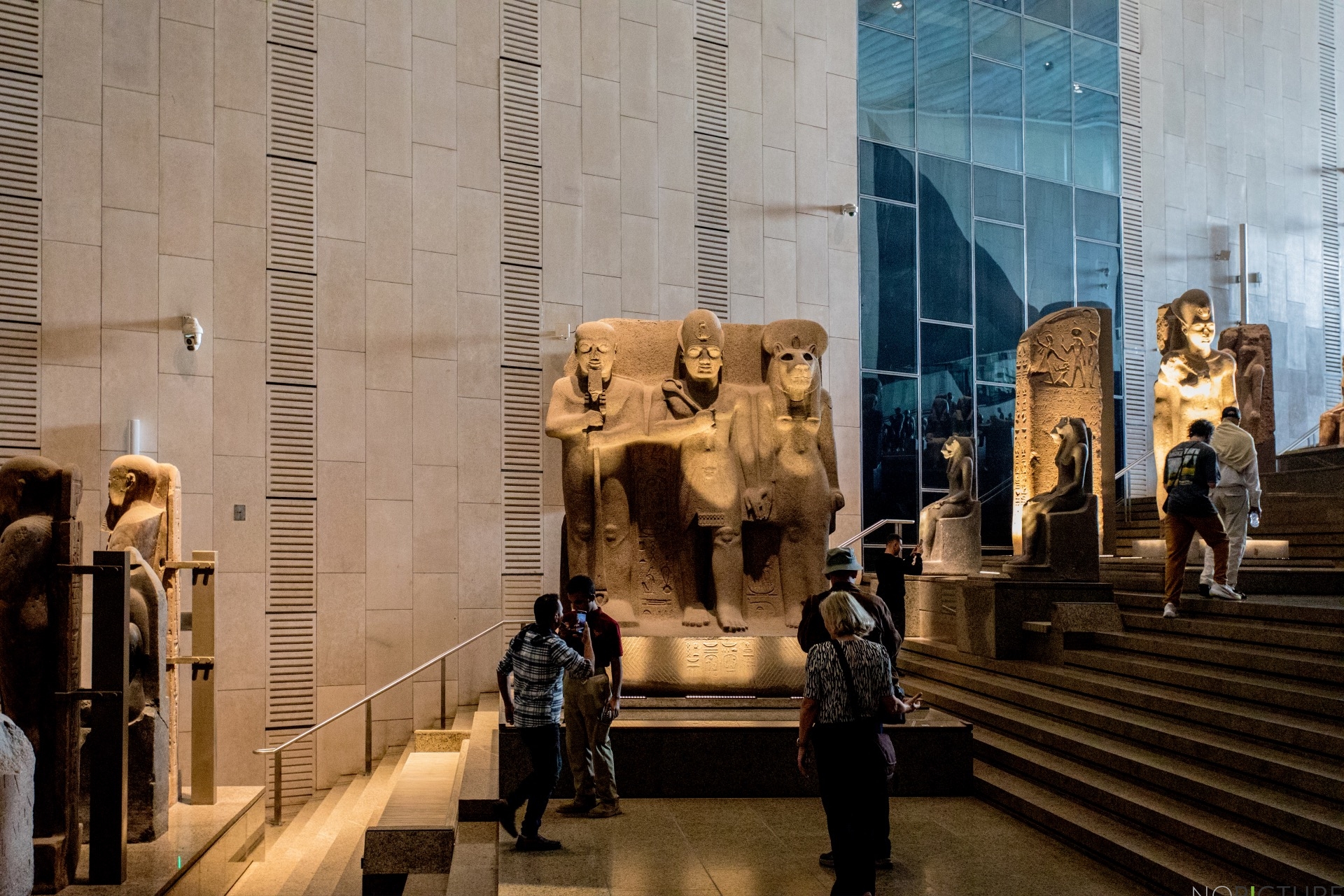
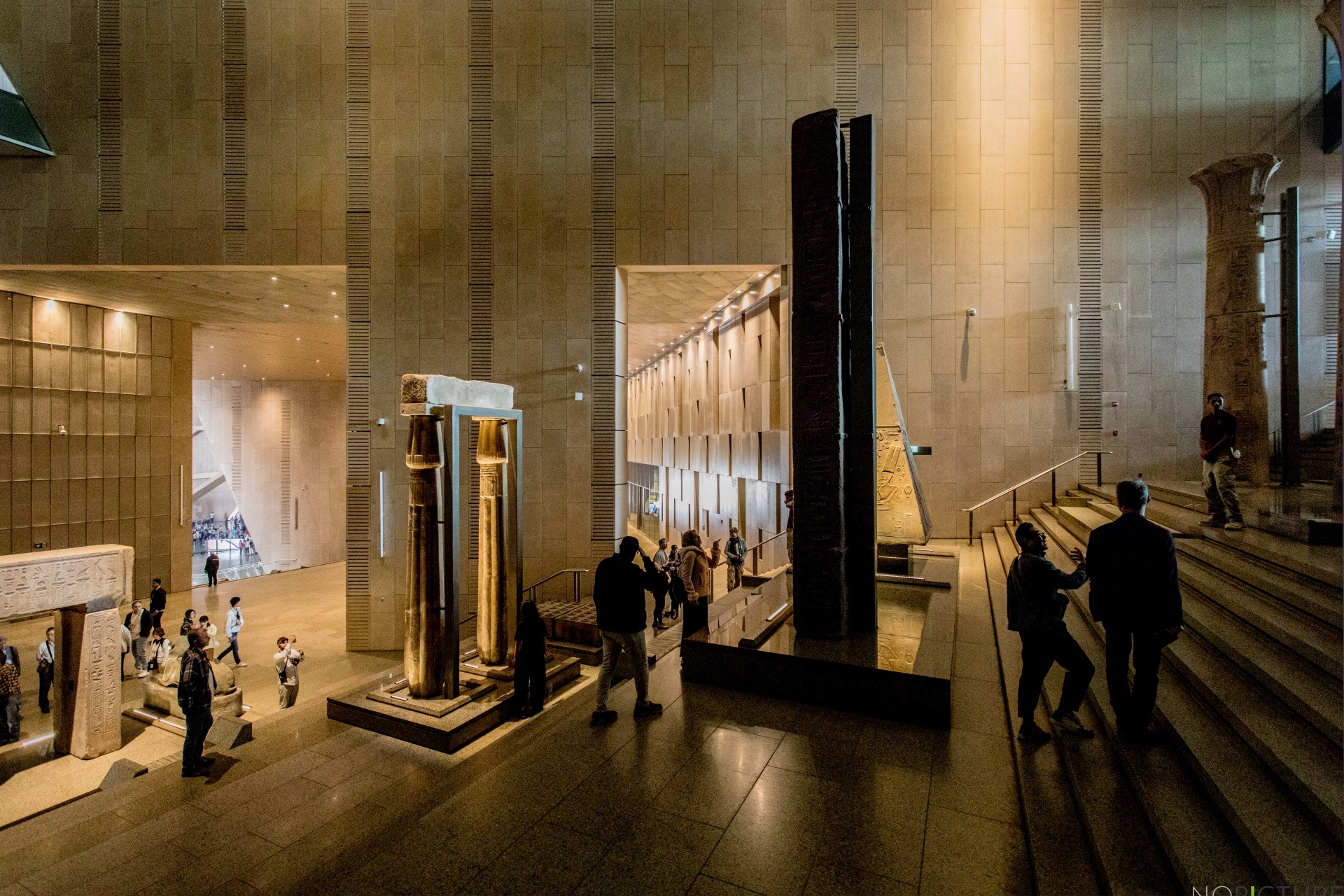
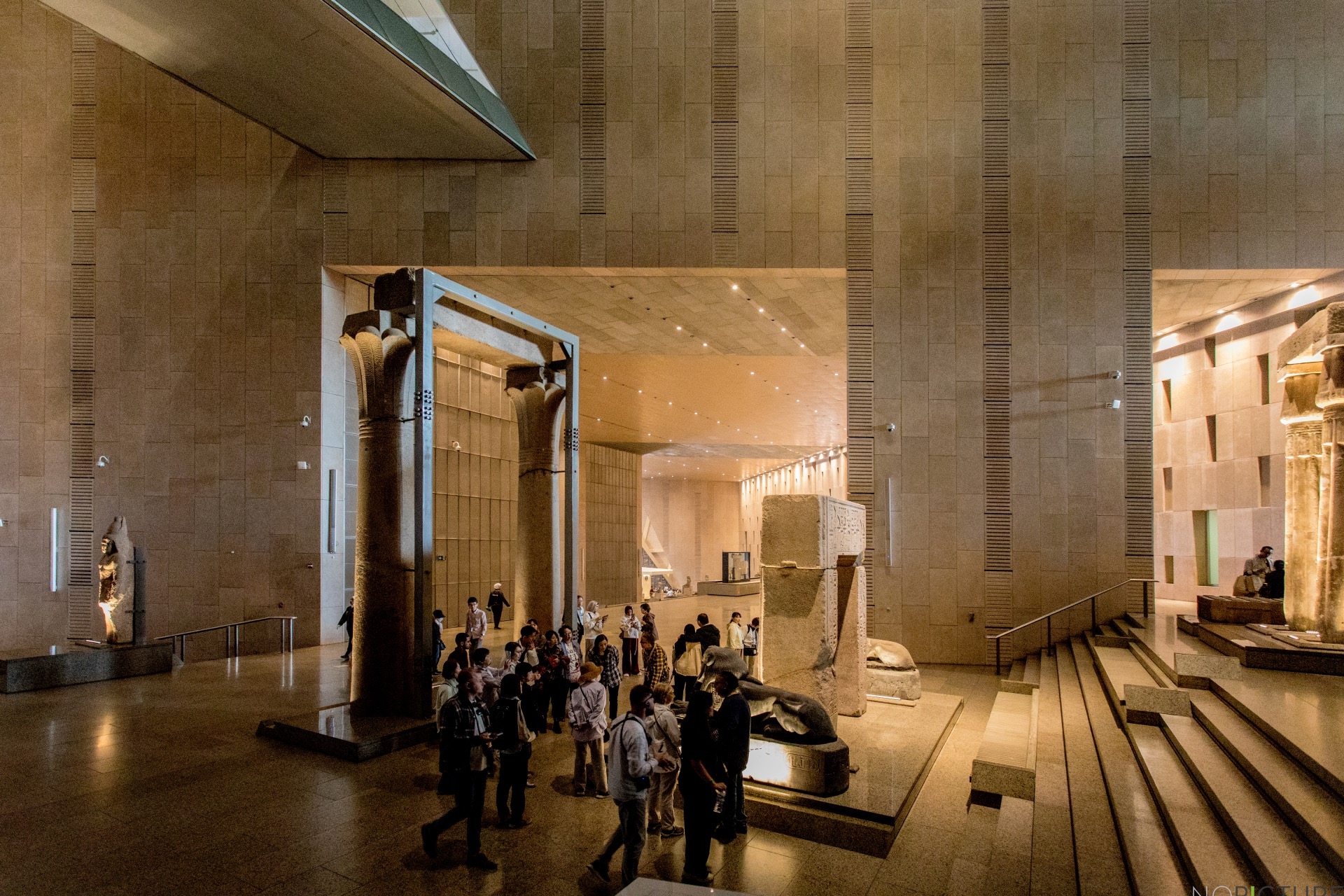
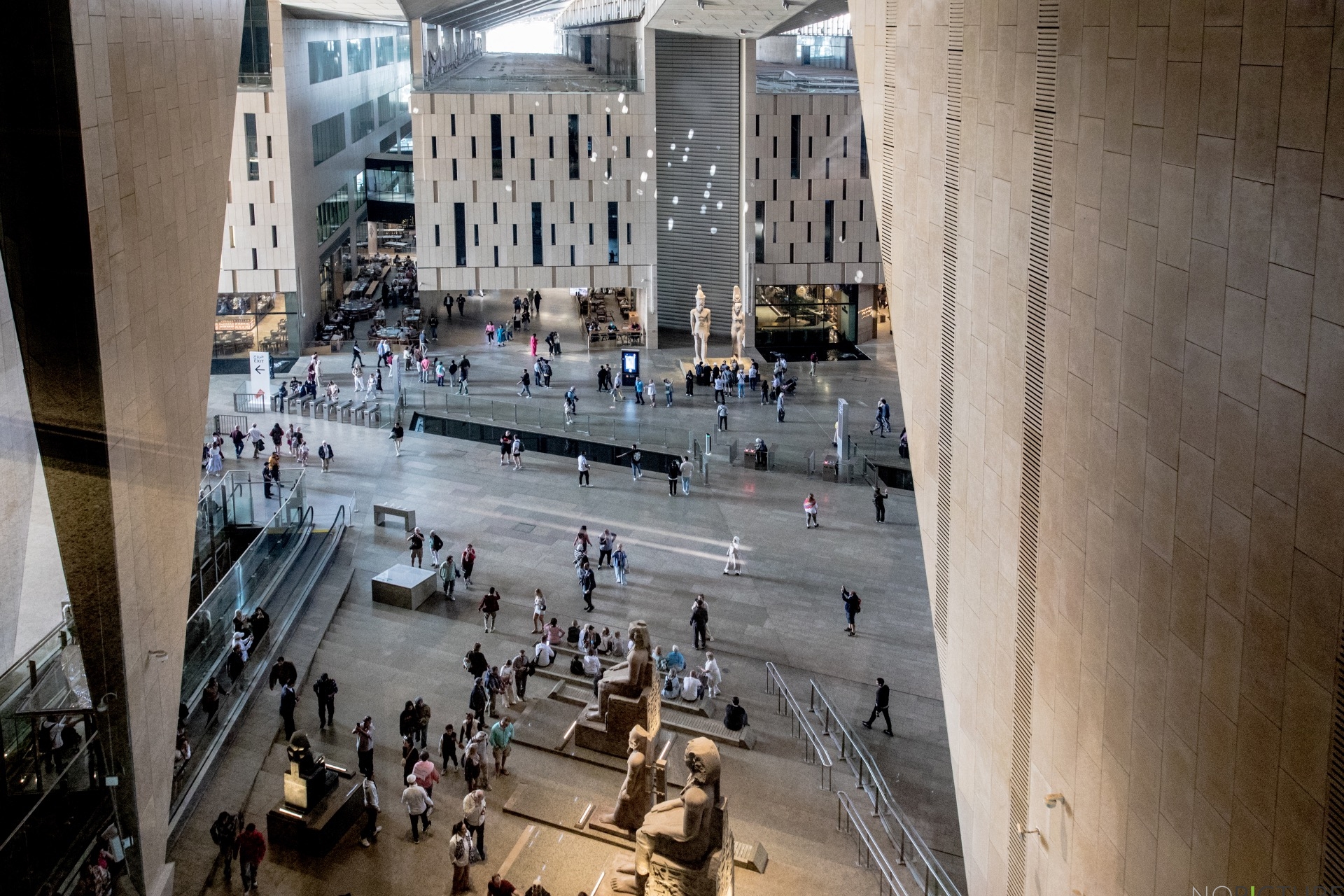
Taking the Grand Stairs is an experience on its own. When you climb the stairs you walk a timeline spanning 30 dynasties of Gods and Kings with 87 statues you can admire from very close by.
The museum attendants had their hands full to make people aware that you are not allowed to touch them.
There is something special about the 24 m high staircase, but it only became clear to me when we walked down it for the second time. The steps are not perpendicular to the wall but are placed at an angle, which makes it seem as if you are stepping onto an actual pyramid.
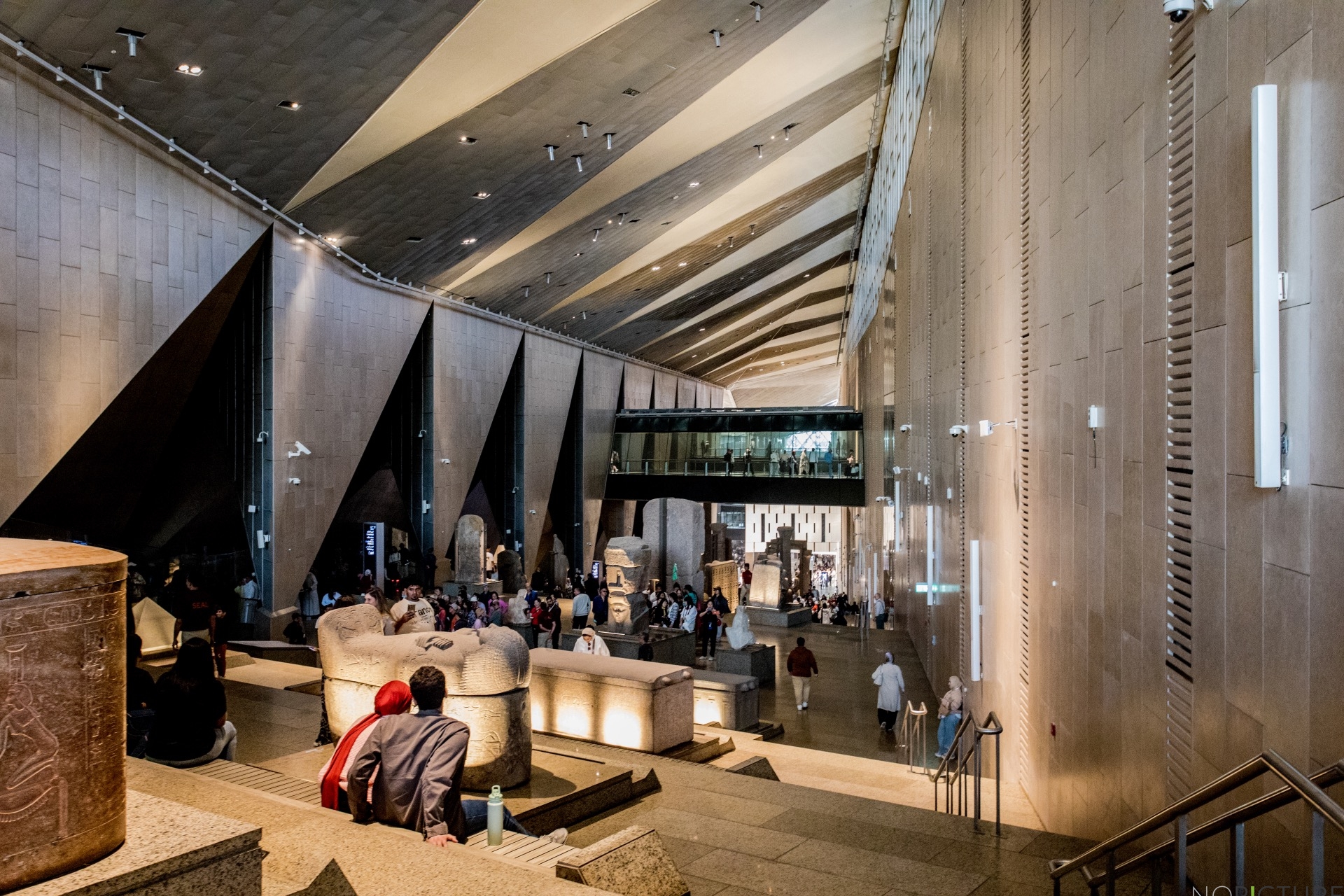
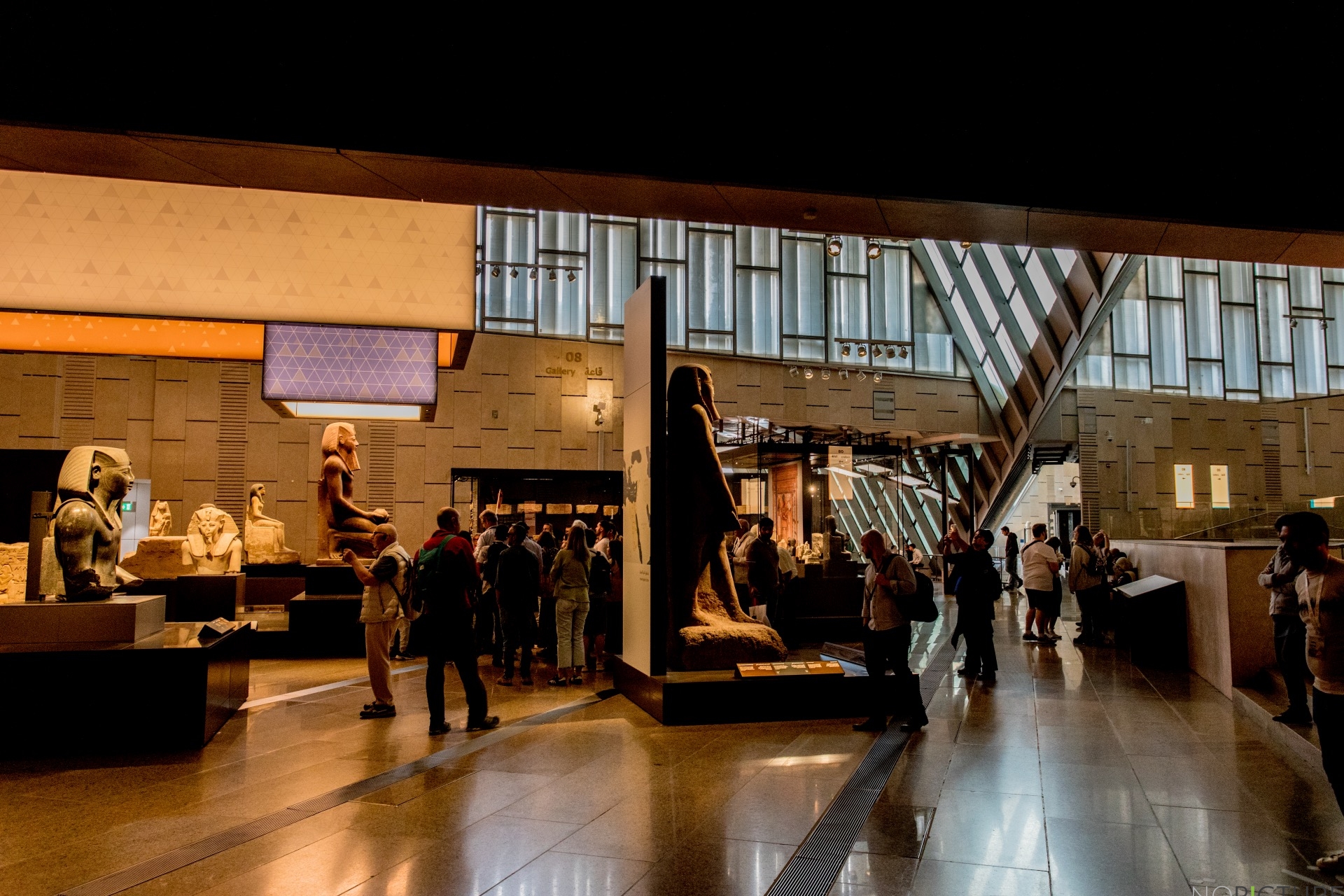
There are 3 main wings in the museum. The central one is Kingship [the Grand Stairs], left wing is Society and the right wing Beliefs. Everything is neatly arranged in chronological order, which makes it easy to navigate around. Don’t forget that the museum section covers 92.000 m2 and a commercial section of 40.000 m2 on a total area of 500.000 m2. That includes the garden and the Khufu boat museum.
Because there is so much to see, it is difficult to decide what to describe. I think the easiest would be that you visit it yourself to see it all.
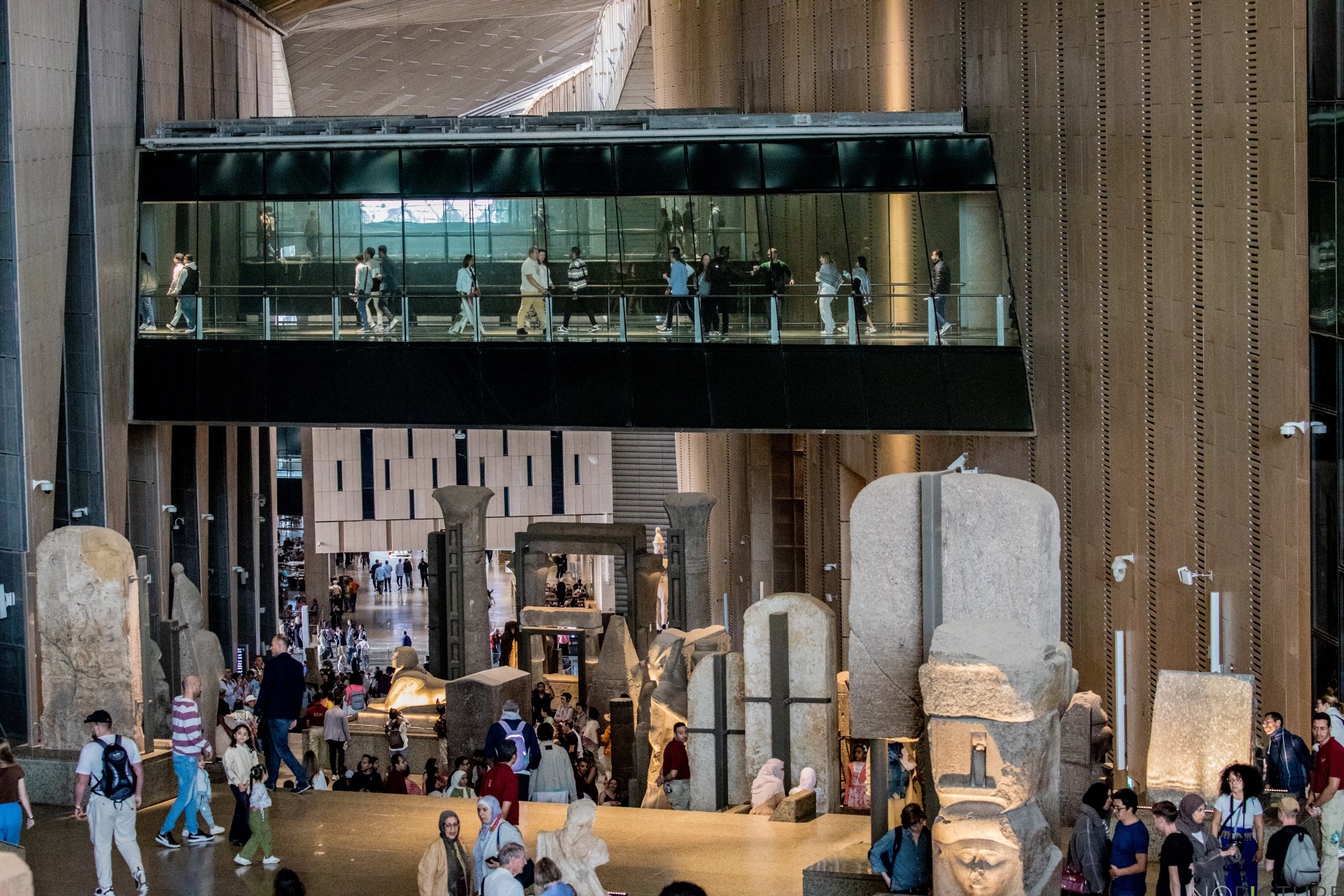
The surroundings of the museum area have been modified dramatically. Houses were taken down, new roads, a metro line and station were build to improve accessibility.
And to provide the visitors of the GEM an unhampered panoramic view of the pyramids.
The museum with his 100.000 artifacts of Egypt’s ancient civilisations (50K+ on display), paired with the vibrant life of modern Egypt, creates a bridge between past and present.
And soon you will also be able to literally walk (2km) from the museum over a bridge to the Giza plateau to admire the pyramids. At the time of our visit it was still currently under construction.
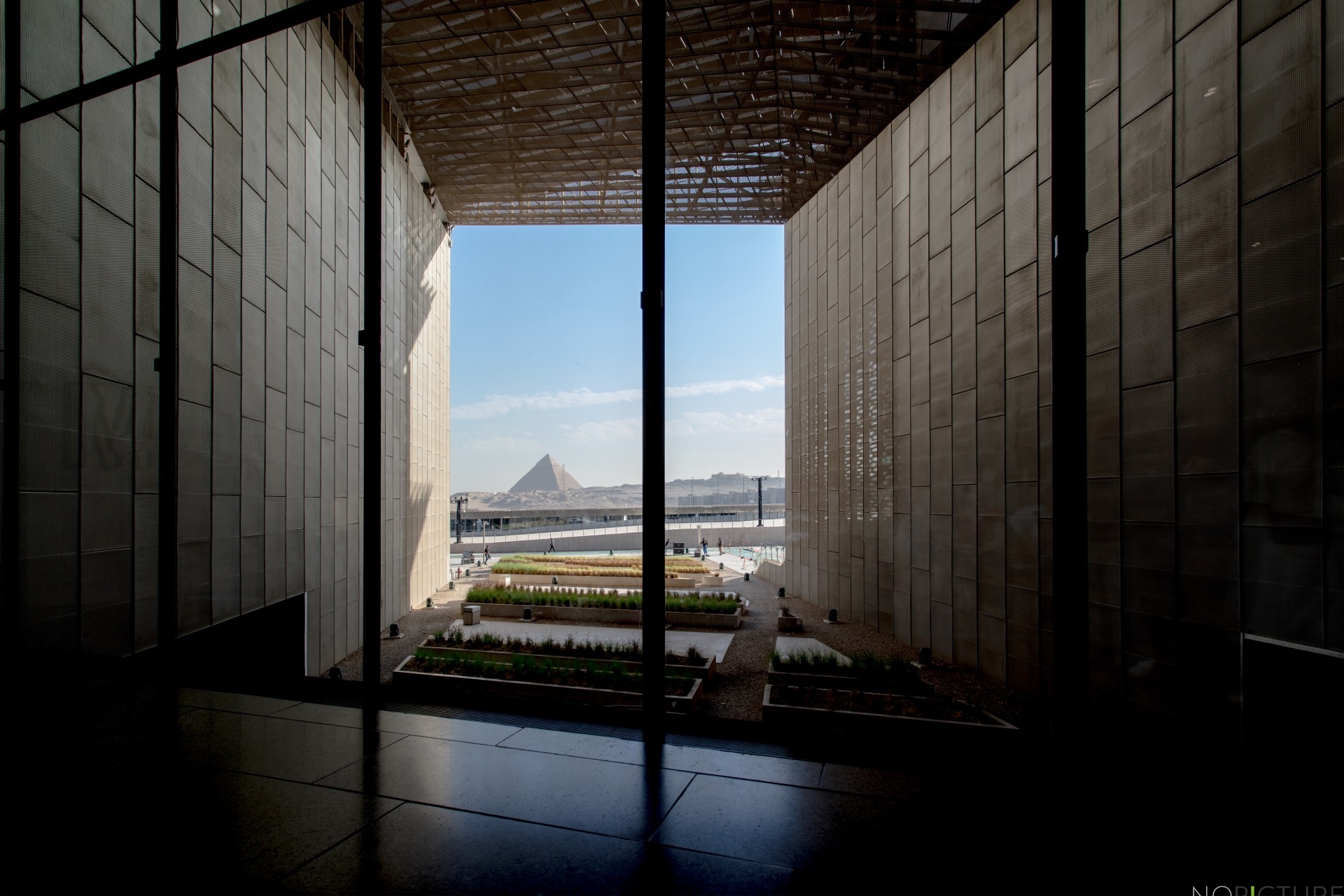
What also contributes to the beauty of the museum is its architecture.
The architects have succeeded in creating beautiful views through openness and connection with other parts of the museum.
You can see this reflected throughout the different wings. The atmosphere is intimate, light and open at the same time.
There are few straight walls; many of them are slanted, which gives the structure of the building an interesting rhythm.
With 17 specialised labs and 100+ experts, the museum serves also as a hub for restoring and preserving Egypt’s priceless heritage.
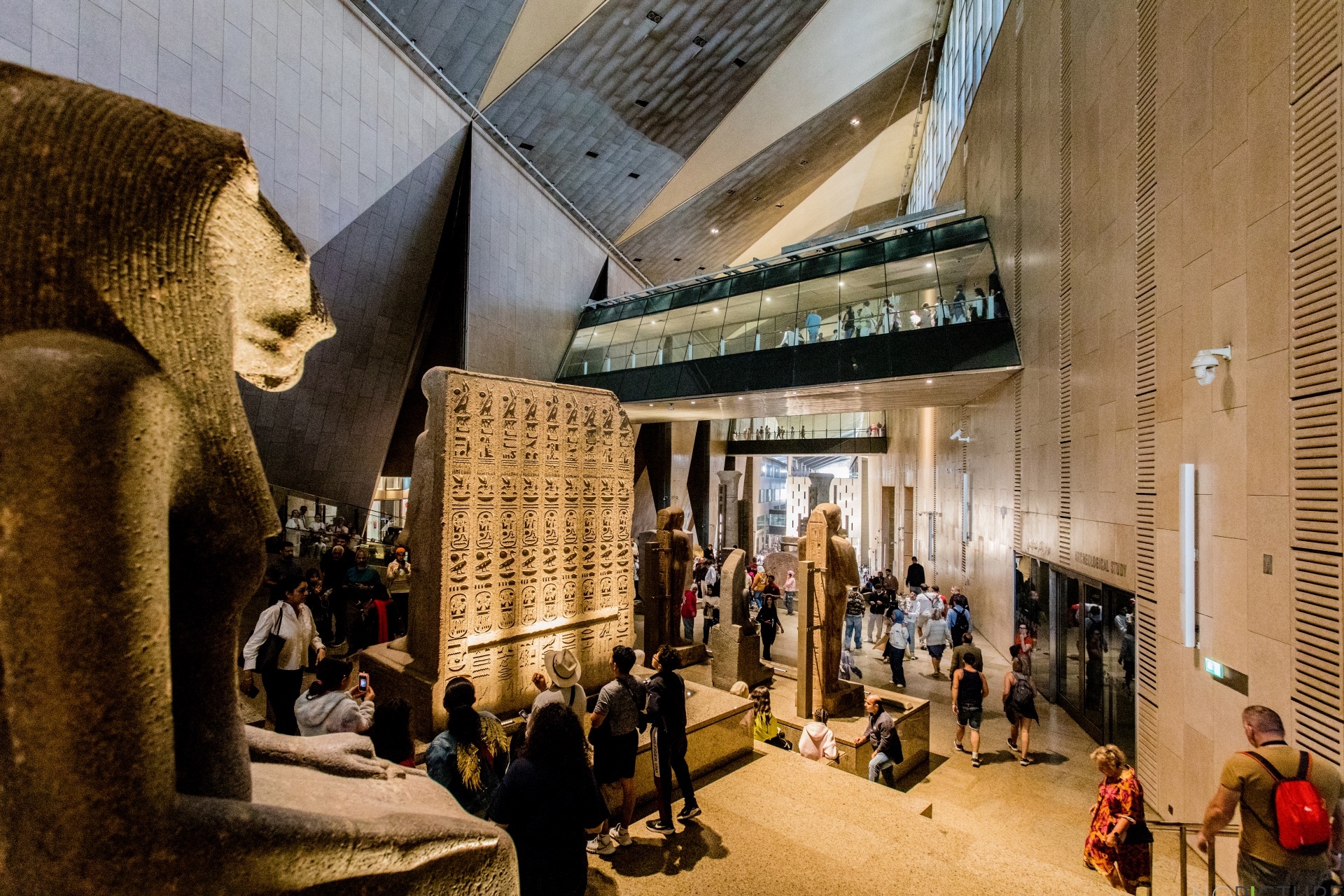
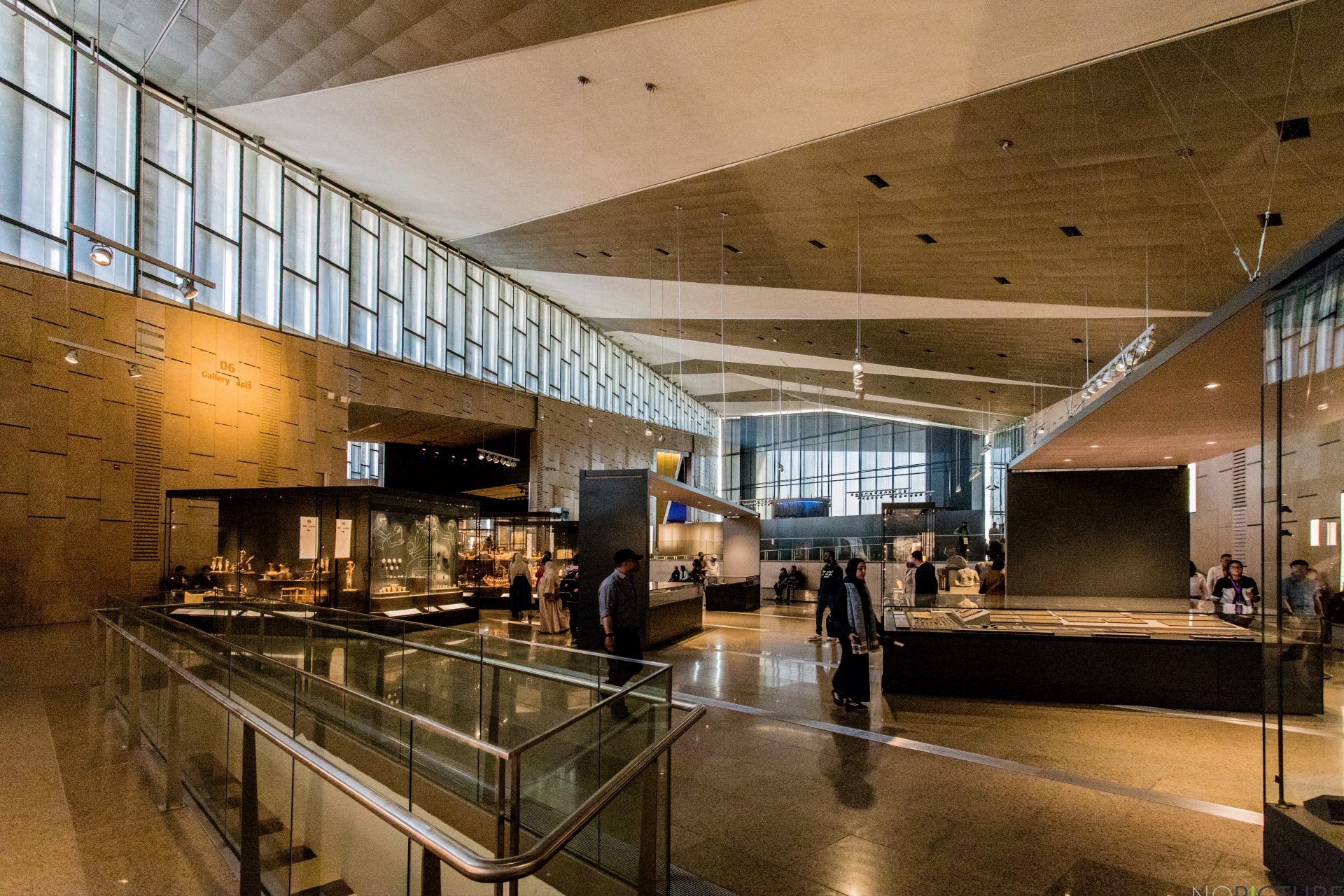
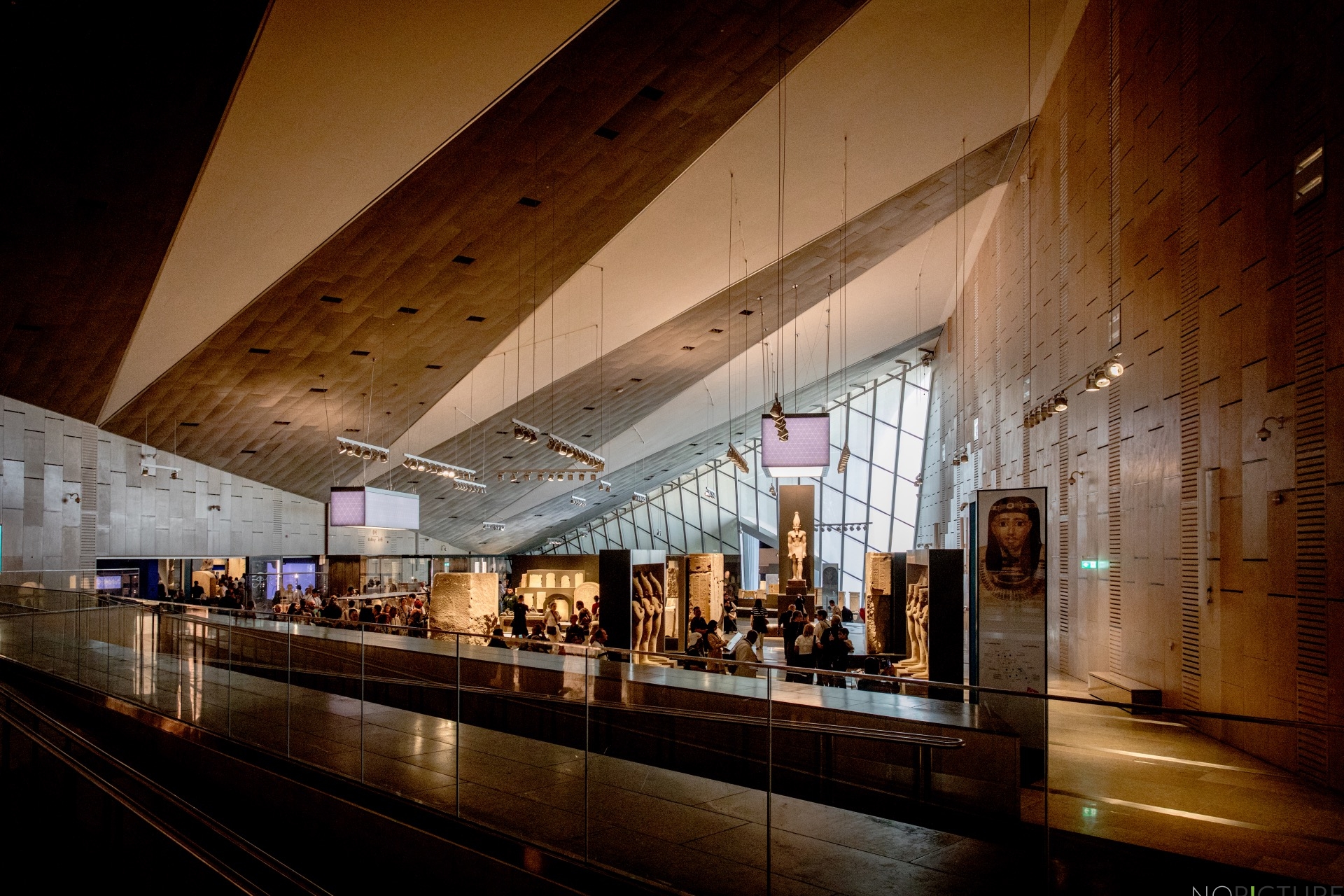

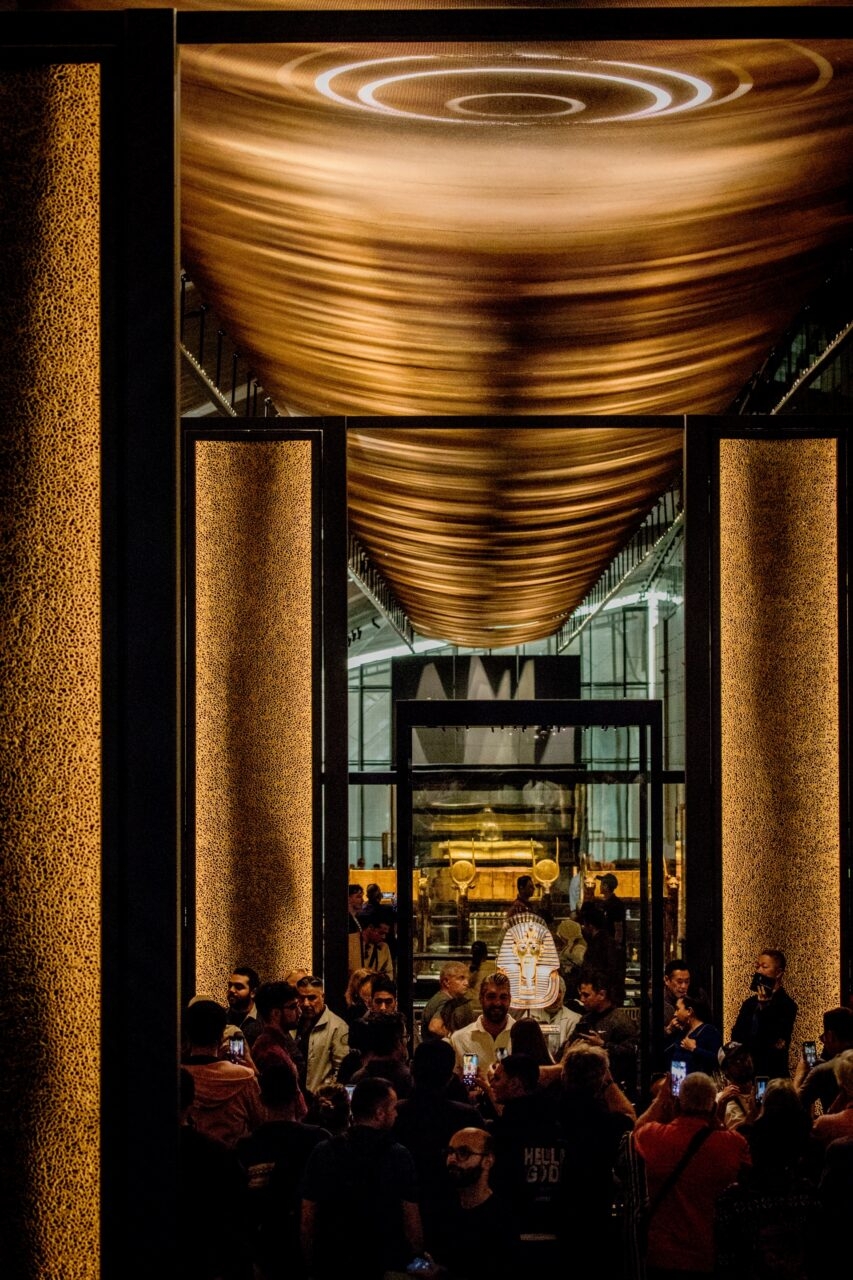
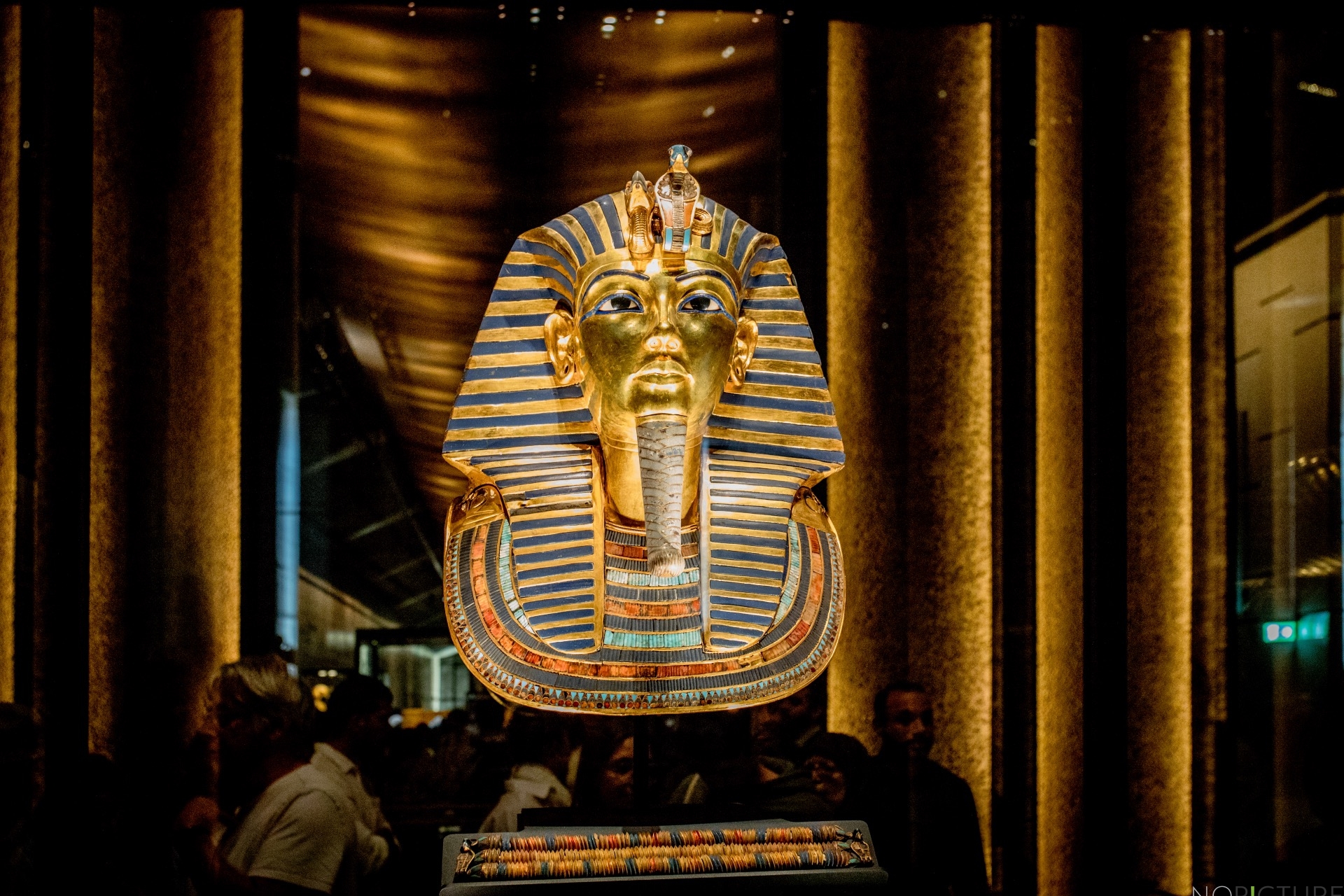
The choice of materials used is also ingenious. In the Tutankhamun Gallery, porous concrete walls were used in addition to marble and onyx. The sheen lighting made them look a bit like coral.
A structured fabric hung on the ceiling, which was also illuminated along the sides, creating a mystical atmosphere in the gallery.
The architects have truly created the perfect resting place for the royal mask.